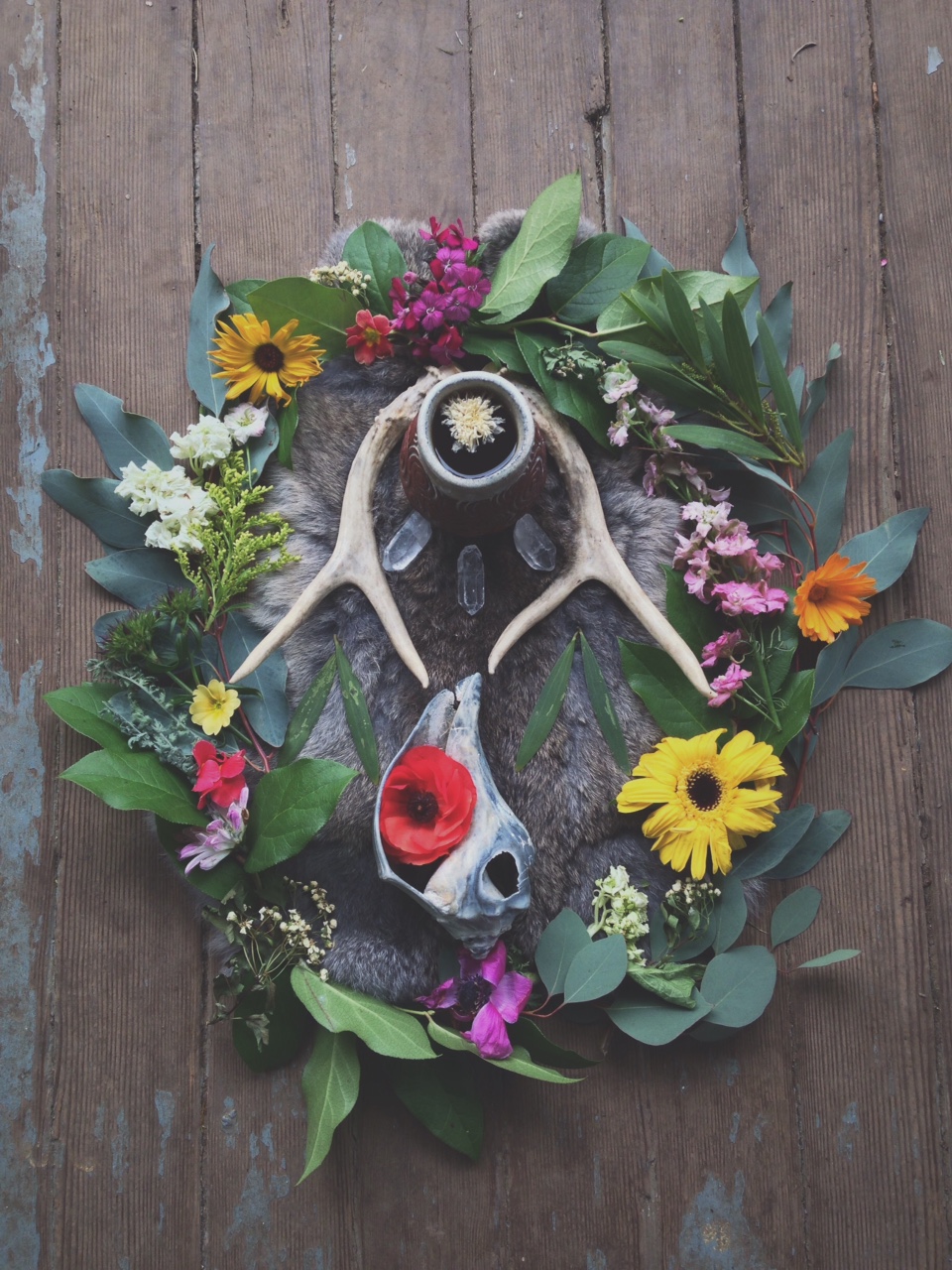
Showing posts with label pagan. Show all posts

Thursday, June 21, 2018

Wheel of the Year - Litha


Litha or Midsummer occurs during the Summer Solstice. It is the longest day of the year and the shortest night, this is the peak of the Solar year and the Sun is at the height of power. Across the land flowers are in full bloom and the crops are reaching maturity as the harvest quickly approaches. Litha is a time of joy, happiness and celebration. Today we will discuss the history and lore of Litha and how you can celebrate with us at home.


HISTORY AND LORE

Litha or Midsummer is the Pagan celebration of the summer solstice. It is one of the four cross-quarter days and one of the four lesser Sabbats. It is the longest day of the year and the shortest night - on this day the light overpowers the darkness for the last time in the wheel of the year making it the perfect time for rituals of renewal, protection, and power.

In eastern European lore it is on this day in the story of the twins known as the Oak King and the Holly King, the two brothers battle and the Oak King yields to the Holly King who begins his reign as the darkness of winter and the longest night approach. In the Pagan community we refer to the day as Litha, meaning the opposite of Yule, or as Midsummer, because in the Celtic year Summer officially starts at Beltane and ends on Lughnassahd with this day falling directly in the center of the two.

Like with many Pagan celebrations there was eventually created a Christian counterpart. For those of the Christian faith this the celebration of John the Baptist. The Christian church began this yearly celebration after realizing how ingrained the festivals of this day were within the newly converted Ex-Pagan community. In the 7th century, a Saint by the name of Eligius warned them against these pagan solstice celebrations believing them dangerous and sinful. So began the Christianization of Midsummer which eventually became the feast of Saint John the Baptist, unlike other saints' days which usually occur on the day of their martyrdom, this feast is celebrated on the day of his birth. It is one of the few saints' days that will be celebrated regardless of if falls on a Sunday whereas typically the practice is to suspend the feast.


RITUAL AND OBSERVANCE

Beltane and Spring have given way to the maturity and heat of the Summer and so too do the God and Goddess. The Goddess is mature and glowing as her belly has grown large from the seed the God planted at Beltane, soon she will give birth. She is the apex of Motherhood and the earth is potent with her life giving energy. The God also changes during this time, he is the Father and slowly he begins to turn towards the realm of shadow.


Many of Litha's traditions center around fertility and celebrate the bounty and maturity of summer. Fire/rebirth being the central element of the Sabbat we often celebrate through rituals that burn, purify and shed. It is believed that herbs and plants harvested during Midsummer yield stronger energies and special power.

Easy ways to celebrate at home:
  • Berry or fruit picking! Many U-PICK farms are opened across the northern hemisphere this time of year and this is a great family friendly way to celebrate summers bounty.  
  • Bake a fruit pie. 
  • Make arts and crafts using natural materials gathered from outdoors. Flower crowns, witches ladders or wickerman dolls are common examples.
  • Celebrate with friends and family around a balefire by jumping the fire (or cauldron) and through song or dance.
  • Light a candle and keep it lit in a window throughout the day and into the evening, meditate on the flame or say a Litha prayer over the candle. 
  • After the sun begins to fall below the horizon light candles or a balefire and allow it to burn out on it owns. 
  • Watch the sunset and meditate on the light of summer as well as the coming darkness. 
  • Pick and hang herbs for drying. 
  • Go on a walk around your neighborhood or a hike through the woods and observe the maturity of the plants and full bloom of the summer flowers. (Don't forget to bring a bag and pick up garbage you find along the way!)
  • Host a barbecue or cook on an opened fire. 


CORRESPONDANCES


SYMBOLS: Fire, oak trees, sun dials, sun wheels, swords, 
fruits, shells
COLORS: White, gold, yellow, red, orange, blue, green
ANIMALS: Robins, cattle, dragonflies, horses, sea creatures
GODDESSES: All mother goddesses, Gaia, Venus, Astarte, Freya, Demeter 
GODS: Apollo, Ra, Ares, all Sun gods. 
INCENSE: Sage, mint, basil, pine, roses, lavender
CANDLES:  White, red, orange, yellow, gold, blue, green
PLANTS: Sunflowers, peony, roses, honeysuckle, daisy, hibiscus
STONE: emerald, jade, bloodstone, topaz, clear quartz
ALTAR DECOR: Fresh cut flowers, herbs, seashells, blades, oak
FOODS: Smoked meats, spicy foods, fresh fruits, mead, honey, wine, fresh vegetables

Tuesday, May 1, 2018

Wheel of the Year - Beltane


Beltane, also known as May day, is one of the four greater Sabbats. We celebrate this fire festival on May 1st, traditionally beginning after moonrise. Beltane marks the beginning of the third quarter or the second half of the ancient Celtic year. During this Sabbat we celebrate the union of the Goddess and the God through feast, dance, fire and more. Today we will discuss the history, symbols and stories of the Sabbat and let you know how you can join in at home too!


HISTORY AND LORE

Beltane is an ancient holiday celebrated on May 1st. In ancient times so much of life was tied into the changing of the seasons and Beltane being a fire festival and celebration of the light part of the year made this fun festival a big deal to the Celts. Since the Sabbat revolves around birth, renewal, light and growth many rituals were held to promote fertility and growth. It was common on Beltane to use Balefires to drive herds from the hills, the druids kindled the Beltane fires with specific incantations and later the Christian church took over the Beltane observances, a service would be held in the church, followed by a procession to the fields or hills, where the priest kindled the fire. 

Today this is still a holiday of union - both between the Goddess and the God and between man and woman. We, as Pagans, celebrate sexuality (something we see as holy and intrinsic to us as holy beings), we celebrate life and the unity which fosters it. The myths of Beltane state that the young God has blossomed into manhood, and the Goddess takes him as her lover. Together and through their union, all life begins. The flowers and greenery we decorate with symbolise the Goddess and the Maypole represents the God. Beltane is the season of maturing life and deep found love. This is the time of vows, handfastings and commitment. Beltane marks the return of vitality and passion of summer. 

RITUAL AND OBSERVANCE

There are many ways to celebrate Beltane at home! Here are a few of our favorites...
  • Take part in a bonfire, if a bonfire isn't reasonable given your circumstances, weather or location create a "candle bonfire" and celebrate in doors!
  • Build and dance around a May Pole either alone or with friends. 
  • Dance like no one is watching! This one seems silly but Beltane is all about celebration, being wild, sensuality, love and light. 
  • Participate in a pleasure or love ritual with your partner. 
  • Decorate your home and Altar with fresh spring flowers, red and white candles, seeds and eggs. Any symbols of spring and fertility are appropriate. 
  • Leave an offering in your garden to the fairies as it is believed they can cross over during Beltane.
  • Pick wildflowers and reflect on nature. 


CORRESPONDENCES 

SYMBOLS: Fresh flowers, seeds, eggs, the may pole, and any phallic objects.
COLORS: Red, white, pink, green and brown.
ANIMALS: The stag, doves, rabbits, bees and cows.
GODDESSES: Aphrodite, Venus, Diana, Artemis, Persephone, Freya
GODS: Pan, Dionysus, Eros, The Green Man
INCENSE: Frankincense, jasmine, rose, sandalwood
CANDLES:  White, red, silver, gold
PLANTS: All blooming flowers, lily, foxglove, jasmine, rose, violet, dasiy
STONE: Rose quartz, emerald, bloodstone
ALTAR DECOR: Fresh cut flowers, seeds, antlers, honey jars, fresh cut herbs
FOODS: Honey, beef, wine, sweets, sugary drinks, breads, dairy products

Tuesday, March 20, 2018

The Wheel of the Year - Ostara


Ostara, also known as the Spring equinox and the Pagan Easter, is time of balance and equilibrium - day and night are equal and the wheel is, for the moment, balanced. You can see signs of rebirth and life all around you in the natural world; flowers are blooming, the birds migrate home to lay their eggs, and if you're lucky you may even see a mother fox and her pups. During Imbolc we welcomed back the Sun and celebrated the triumph of light, now during Ostara that we can begin to truly see those changes. Today we will discuss the history of Ostara, its lore, symbols and how you can celebrate at home.


HISTORY AND LORE.

Ostara is the Pagan version of "Easter" (Ä’ostre) - or rather, Ostara is the day that Christians borrowed to be their Easter. Ostara is named from the Germanic goddess, Eostre/Ostara, who was traditionally honored in the month of April and celebrated with rituals and festivals of fertility, renewal and re-birth. We can still see many symbols from these festivals in the decorations we use today such as the hare, eggs, daffodils and many more! This is the second of the three spring festivals and will always fall between March 20-23 depending upon which day the equinox arrives.
In the story of the Goddess and God, Ostara is a time to celebrate the Goddess is in her young Maiden aspect, the Horned God is also young and vibrant - together the two of them revel in their youth until they mature and marry at Beltane (May 1).


The Christian version of Easter incorporates many Pagan symbols unbeknownst to many Christians - such as eggs, rabbits, clovers and lambs and as with many Christian holidays these symbols and traditions were incorporated into their own to make the conversion of early Pagans easier. The egg is a symbol of fertility and rebirth and it's symbolism is celebrated almost universally by ancient cultures. The Egyptians and Chinese all had their own customs of coloring eggs, today still you will find that painted eggs are a very popular and collectible Chinese art form. The legend of the Easter bunny and hiding of eggs are rooted in germanic folklore and traditions. So too the hare and lamb are the symbols of the the goddess Eostre, a Goddess of renewal and fertility. For Christians Easter is a day to remember the death of Jesus and but also to celebrate his resurrection, however early Christians historically did not celebrate Easter as we do today. It wasn't until the year 325 C.E. the church actually even established the date of Easter, which they proclaimed will be the first Sunday after the full moon following the Spring Equinox (Ostara).


  RITUAL AND OBSERVANCE.

It is common practice during Ostara to use this time to free yourself from things which hinder progress - hints the classic "spring cleaning" which we can apply to both our inner selves and our home. During this Sabbat we are celebrating the end of winter the triumphant rebirth of spring so many of the rituals that are practiced on this Sabbat revolve around these themes - ends and new beginnings.


You can celebrate at home in numerous different ways here are just a few:
  • Do some planting, either blessing seeds into the soil or transplanting seedlings.
  • Work in the garden or the yard clearing away the dead foliage from winter, look for signs of new life and fertilize your bushes and trees with compost.
  • Meditate on the rising sun and the lengthening days. 
  • Paint and consume hard boiled eggs. Eggs represent fertility and rebirth. 
  • Decorate your altar with the symbols of Ostara - eggs, feathers, flowers, seeds, rabbits. 
  • Write down a wish or goal you want to accomplish this season, roll the paper as though its a scroll and "plant" it into the earth. Cover the hole and take time each day to meditate on your scroll. 
  • Clean your home, focus on renewal and the banishing of harmful energies. Many witches use their ceremonial besome to sweep out the home as well. 
  • Smudge your home with sage bundles to remove any residual energies from the past year.  
  • Have breakfast for dinner! Both dairy, biscuits and eggs are had in plenty for an Ostara dinner.


CORRESPONDANCES.


SYMBOLS: Eggs, hares, deer, lambs, foxes, four-leaf clovers, flowers, seeds, baskets
COLORS: Green, yellow, white, and all pastel colors
ANIMALS: Hares, deer, chicks, lambs, butterflies, baby animals
GODDESSES: Eostre, Persephone, Diana, Astarte, Hera, Venus
GODS: Pan, Dionysus, Eros, The Green Man, Ares, Thoth
INCENSE: Jasmine, sage, rose, violet, and honeysuckle
CANDLES: White, silver, gold, yellow, pink
PLANTS: All new growth, all bulbous flowers, ash, birch, dogwood, olive, iris, honeysuckle, tulips, iris, peony
STONE: Clear quartz, rose quartz. jasper, moonstone, opal, turquoise 
ALTAR DECOR: Flowers, eggs (painted or plain), birds nests, seeds, budding flowers, stag antlers, light colored feathers
FOODS: Dairy products, eggs, biscuits, hot cross buns, roasted seeds, sprouts, spinach, lettuce, bacon, maple syrup 


sources: plentifulearth,com, whitegoddess.co.uk, wikipedia, thoughtco

Wednesday, December 20, 2017

The Wheel of the Year - Yule


Welcome to the longest night of the year! Yule is the original Christmas and many of your favorite traditions are probably derived from this Pagan holiday. Today we will discuss the history of the sabbat, how its celebrated today and how you can join in! 

Thursday, November 9, 2017

AMA - Ask a Witch : The 2017 Edition


More often than not when someone new finds out that I am a practicing Pagan they react one of three ways; they roll their eyes at the idea of witchcraft comparing it to something akin to what they know from sci-fi movies and fantasy novels rather than an actual Religion, they are fearful and attempt to push religious conversion my way, or they show a genuine interest and healthy curiosity about different belief systems and begin asking questions, - sometimes in rapid fire succession!

Last weekend before Samhain (Halloween) I posted an anonymous survey and started discussion posts on instagram, facebook and reddit for strangers to ask me their questions about Witchcraft and the Occult.
Today I will answer some of those questions in this article and I implore any of you with more questions or even if you just want more detail on a topic to leave me a comment or send me a DM! Let's get started!


Do spells really work?
A: Yes, I believe they do work when performed with intent and focused energy. It may help to think of spells in a different light, think of spells more like prayers or if you're not a religious person as "the power of positive thought". Media has lead many people to believe the hollywood version of spellcasting; you mix some herbs and a puff of purple smoke appears and publishers clearing house is suddenly outside your front door - this is incorrect. A more accurate depiction of spellcraft would be someone sitting alone in their room before an altar they've decorated with herbs, stones and candles, that correspond to their purpose, chanting softly as incense smokes wafts around them. 

Do you worship the devil?
A: No, absolutely not. Witches do not believe in the Christian concept of Satan, hell or any form of ultimate evil. 

Are you born a witch? How do you know? 
A: You are no more born a Witch than you are born a Christian. Neither religion believes you are born into it, it is a choice you make then you learn about your faith through practice and hard work. In Witchcraft you are initiated whereas in Christianity you are baptized. 

So you mean you're a Wiccan, right?
A: Nope, I am a NeoPagan Witch. Paganism in the umbrella term for earth based religions (Not all Pagans practice Witchcraft or Wicca) and many different variations of worship exist beneath it, Wicca is a tradition of Witchcraft that became popularized by Gerald Gardner in the 1950s and is not necessarily affiliated with other types of Paganism though it is still a Pagan religion.

What is the difference between a wiccan and a witch?
A: It can get a bit confusing but it may help to think about it like this; not all Christians are Catholic but all Catholics are Christian, in that same respect all Wiccans are Pagan/Witches, but not all Witches/Pagans are Wiccans. 

What god(s) do you worship? 
A: This is one of the hardest questions, in my opinion, to answer as a Witch because honestly... it just sort of depends. Witches are, generally speaking, dualistic theists and worship the triple Goddess (the divine feminine) and the Horned God (the divine masculine) as equal and opposite cosmic forces. Some Witches worship multiple Gods (or even ALL Gods) and choose a certain patheon they feel attuned to. On the other hand, some Witches choose no deity and work more with "universal" energies and worship nature and the cosmos as a whole. 

How long have you been a witch? How did you choose your path?
A: I began practicing Witchcraft somewhere between the ages of 8 and 10 years old, and when I say practicing I mean obsessively reading every Wicca or Witchcraft book I could get my hands on, watching every movie, tv show and documentary and burning candles in the backyard chanting with my bestfriend under the moonlight. I began seriously considering Paganism my religion sometime around 13 as I became more informed about the realities of the craft verses the misconceptions of television and film. I was initiated at 16. 
I've always loved nature and felt a strong connection to the occult so this path seemed like a no brainer for me and I was lucky enough to have parents who let me explore other belief systems and make my own religious decisions. 
TL:DR -> 15 years or longer depending on your definition of practice. 

In the movie the Craft it states that in witchcraft that whatever you put out comes back times three. Is that a belief in Witchcraft or just movie BS? 
A: This is actually one of the few things movies tend to get sort-of right. 
While not all Pagans/Witches believe this, most do believe strongly in karmic forces and that whatever energy you put out into the world will return to you, often threefold as three is a scared number to Witches. The rule of three, generally speaking however, is a Wiccan concept derived from a poem called The Wiccan Rede which you can read here

What do witches believe will happen to you after death? 
A: Witches do not have the same relationship with mortality that most people do. The Witches relationship with endings and death is one of acceptance and reverence. Beliefs regarding the afterlife may vary slightly but most Non-Wiccan Pagans believe in reincarnation and some concept of nirvana. Most Wiccans believe in a version of "heaven" called The Summerlands.

Do you have to join a coven? How do you find one?
A: No, you do not HAVE to join a coven or a circle though there are many advantages to doing so especially if you are seeking someone to learn from. Many Witches choose to work in solitude however and this is also acceptable, I myself, work the majority of the time alone. A good place to begin looking for covens or groups to learn from/join and voice is The Witches Voice. Make sure to ask lots of question and expect them to ask you a lot of questions as well - if you are uncomfortable then go with your gut and find another coven, likewise if they reject you do not feel hurt. This is no different than seeking a church to join, finding the right one for you can be a journey in itself.  

Do ouija boards really work?
A: I am probably going to get crap for this but in my opinion - no they do not actually contact the dead or demons or spirits. I love the curiosity around them and the spooky aesthetic (I collect ouija  board paraphernalia) but I do not believe in them. Ouija boards work through something called ideomotor effect which explains that your body's subconscious causes micro movements. Read about the science behind it here.

Do you do anything thing different from the rest of us for Halloween (e.g. not begging for sweets/watching bad movies)? 
A: Witches celebrate Samhain in place of or in addition to Halloween. Samhain is the Witches new year and highest holy day. We observe the death of summer and take this time to honor our ancestors. I wrote a full length article about it here.

Can I cast a love spell on someone? 
A: You can but you should not do so, it is unwise to attempt to influence another person or perform spells on them without their consent - remember when we talked about karmic forces and the rule of three? It is very likely that these types of spells will not turn out how you thought they would, if they come to fruition at all. The only type of love spell I suggest to ever cast is one on yourself; to bring about greater self-love, to draw your soulmate near, to attract love in general (no strings here, no specific person) or the numerous other love spells that exist and don't involve manipulation.

Where do I get a book of shadows?
A: A Book of Shadows or a Grimoire is not generally something you purchase, you may purchase a blank book intended to be used as one but you create your own content. A Book of Shadows is a workbook, a journal, a scrapbook, and yes, a spellbook. Inside a Witches personal Book of Shadows (Covens often have a community book in addition to members having their own) you will often find; charts of correspondences, recipes, rituals, meditative prompts, moon phases and so much more. 
 I will eventually create a flip-through video of my own Grimoire and post it here. 

Do you really get naked to do spells? Is it a sex thing?
A: Yes! The term we use in the craft is 'skyclad'. This is not a requirement though so if you aren't comfortable going skyclad, don't do it! The main purpose of performing rituals in the nude is that it is believed energies flow more freely between you and the universe without the restrictions of man-made clothing, you are as you came into the world. It should be noted that performing rituals skyclad is intended to be a deeply spiritual and connective experience and is in no way sexual or sexualized, many Witches (myself included) will only go skyclad with their partner or in solitude. 

How do Witches view sex and marriage? 
A: Witches view sex as scared, pleasurable and deeply intimate. Sex is part of nature and therefore a divine act when it takes place between two consenting adults. Pleasure is not at all sinful in Pagan religions and while sex/fertility rituals (Ie, The Great Rite) do exist and are commonly practiced, group sex is very rare and mostly a construct of the media.
Most Witches are monogamous and choose one partner to spend their life with. A Pagan wedding is called a Handfasting, during the ceremony you and your partners hands are gently bound together  either before or after you recite your vows to each other thus "tying the knot". Other aspects of Pagan weddings vary from custom to custom just like Christian weddings - some drink wine, jump the broom, or light a unity candle. 


How do you deal with people making assumptions about your practice based on movies, TV, cartoons, etc.? I have great respect for your choice and have always wondered how I would deal with ignorant people assuming that witches steal children and curse crops.
A: This is something I used to struggle with a lot more in my youth than I do today. I don't know if it became easier for me to deal with as I matured or if the rise of the internet helped dispel a lot of old beliefs, stereotypes and superstitions. 
When I am confronted by people with negative assumptions I do my best, when possible, to inform and educate them. If I am unsuccessful or if they just want to be mean just for the sake of being mean I will turn the other cheek and agree to disagree. 

Monday, October 30, 2017

The Wheel of the Year - Samhain


Samhain has always been one of my favorite Sabbats, the air is chilly and you can smell the burning of wood from the seasons first fires floating from their hearths and wafting through the crisp night air. It is time for us for remember and honor those who have passed, celebrate our successes from the past year, plan for the new year and  prepare for the long winter and dark nights ahead of us until the Sun God is reborn again during the Winter Solstice. 
 My hope for this blog is not only that I entertain you but also that I am able to educate you on a variety of different topics, traditions and holidays that I may have more of or a different perspective on. I figured - well, heck, what better Sabbat to start on than Halloween! 

HISTORY :
Before we get into the ritual/observance aspects of the holiday, let's discuss it's history first. Samhain (pronounced sow-ween or sow-win and translated meaning "summers end") is the Witches New Year and one of the four greater Sabbats; you may know it by another name like Halloween, Day of the Dead, Spirits Night, Hallows Night, or All Hallows Eve. In the northern hemisphere, many Witches celebrate Samhain from dusk on October 31st through dusk on November 1st though many modern witches in the US and Canada just stick with the Oct 31st date.
    During the rise of Christianity as the dominant religion throughout Europe, Samhain was given new Christian names and guises to make the religious conversion of early Pagans easier. "All Saints' Day" on November 1st was created to commemorate Christian saints and martyrs. It is followed thereafter by "All Souls' Day" which is celebrated on November 2ed and was created as a time to honor or to pray for the souls of the dead.
    Shortly after the migration of Christian Spaniards to Mexico, the indigenous customs honoring the dead mixed with the Roman Catholic customs and gave birth to the Day of the Dead, Dia de los Muertos, which is celebrated in early November throughout many towns and cities in Mexico today.
    Although occurring at the same time of year (even the same day depending on who you ask) and having roots in end-of-harvest celebrations, Halloween and Samhain are in fact two separate holidays that differ considerably in focus and in practice. In contemporary America, Halloween has evolved to be both a family-oriented children's holiday as well as an occasion for those of all ages to creatively express themselves and engage in play in the realm of make-believe and fantasy through costumes, trick-or-treating, storytelling, play-acting, pranks, horror movies, haunted houses, and parties.

SAMHAIN AND DEATH: 

    Samhain is the Celtic New Year, and the highest holy day for Witches. Samhain signifying the end of the yearly cycle begins the inauguration of Winter, it is our final opportunity to harvest and to dry herbs for winter storage. With so much of this holiday revolving around the end of things, it comes as no surprise that death is an integral part of the Sabbat. Vegetation dies back with the first frosts, trees shed the last of their leafs, and literally, death is in the air. 
This helps us understand the ancient notion that at Samhain, the veil is thin between the world of the living and the Dead. For those who have lost loved ones in the past year, Samhain rituals can be an opportunity to bring closure to grieving.

RITUAL AND OBSERVANCE: 

   Samhain is not just a time of death and endings, it is also a time of new beginnings. This is a good point in the year for personal reflection, (the death of the old self is a common theme for the holiday) and for recognizing our flaws and failures while also creating methods for rectifying them in the coming year. 
   In many Celtic countries the Sabbat was observed by leaving food offerings on altars and doorsteps for wandering spirits. Today many practitioners still carry out this tradition, more commonly known as "Hecate Suppers". Other traditions include leaving a single candle lit and left in the window to help guide the spirits of ancestors and loved ones home, extra chairs are set at the table and around the hearth for any spirits visiting the family, and turnips (these days we use pumpkins) were  hollowed out and carved to look like protective spirits and scare away fairies and evil beings. 
    We still observe many of these old traditions today, and in modern times we have even created a few of our own! There is no wrong way to participate in this Sabbat but here are of few of my personal favorites.


  • Nature Walk. Take a meditative walk in a natural area near your home. Observe and contemplate the colors, aromas, sounds, and other sensations of the season. Experience yourself as part of the Circle of Life and reflect on death and rebirth as being an important part of Nature. If the location you visit permits, gather some natural objects and upon your return use them to adorn your home.
  • Seasonal Imagery. Decorate your home with Samhain seasonal symbols and the colors of orange and black. Place an Autumnal wreath on your front door. Create displays with pumpkins, cornstalks, gourds, acorns, and apples. 
  • Ancestors Altar. Gather photographs, heirlooms, and other mementos of deceased family, friends, and companion creatures. Arrange them on a table, dresser, or other surface, along with several votive candles. Kindle the candles in their memory as you call out their names and express well wishes. Thank them for being part of your life. Sit quietly and pay attention to what you experience. Note any messages you receive in your journal. This Ancestors Altar can be created just for Samhain or kept year round.
  • Feast of the Dead. Prepare a Hecate Supper and place it on your porch or doorstep. Alternatively, include a place setting at your table for spirits visiting home, add an offering of a bit of each beverage being consumed to the cup at that place setting, and to the plate, add a bit of each food served. Invite your ancestors and other deceased loved ones to come and dine with you, after the feast, place the contents of the plate and cup for the Dead outdoors in a natural location as an offering.
  • Cemetery Visit. Visit and tend the gravesite of a loved one at a cemetery. Call to mind memories and consider ways the loved one continues to live on within you. 
  • Reflections. Reflect on you and your life over the past year. Review journals, planners, photographs, blogs, and other notations you have created during the past year. Consider how you have grown, accomplishments, challenges, adventures, travels, and learnings. Meditate. Journal about your year in review, your meditation, and your reflections.
  • Renovate. Select an area of your home or life as a focus. Examine it. Re-organize it. Release what is no longer needed. Create a better pattern. Celebrate renewal and transformation.
  • Bonfire Magic. Kindle a bonfire outdoors when possible or kindle flames in a fireplace or a small cauldron. Write down an outmoded habit that you wish to end and cast it into the Samhain flames as you imagine release. Imagine yourself adopting a new, healthier way of being as you move around the fire clockwise.
  • Divine Invocations. Honor and call upon the Divine in one or more Sacred Forms associated with Samhain, such as the Crone Goddess and Horned God of Nature. Invite Them to aid you in your remembrance of the Dead and in your understanding of the cycle of life, death, and rebirth. If you have lost loved ones in the past year, ask these Divine Ones to comfort and support you.

CORRESPONDANCES: 

SYMBOLS: Black cats, Pumpkins, Bats, Owls, Scarecrows, Brooms, Keys
GODDESSES: All Crone Goddesses, Cerridwen, Hecate, Hel, Oya, the Morrigan, Lilith, Kali, Ishtar, Arianrhod, Rhiannon, Tlazoteotl, Nephthys, Persephone, Beansidhe (Banshee), Inanna, Baba Yaga, Isis, Pomona and Cailleach Beara (Brigid's crone aspect)
GODS: Osiris, the Horned God, Herne the Hunter, Cernunnos, Anubis, Odin, Bran, Death Gods
INCENSE: Clove, sandalwood, mint, cinnamon, and sage.
CANDLES: Black, orange, brown, beeswax, white.
TOOLS: Besom, to sweep out the old year and any negativity it had. Cauldron, for transformation.
PLANTS: Pumpkin, apple, grain, pomegranate, mugwort, wormwood, acorn, oak leaf, gourds, root vegetables
STONE: Obsidian, carnelian, onyx, smoky quartz, jet, bloodstone.
ALTAR DECORATIONS: Autumn leaves, fall flowers, pomegranates, apples, pumpkins, ears of corn, sprays of grain, corn dollies, gourds, nuts, seeds, acorns, chestnuts and images of ancestors are all appropriate. Use whatever is in season where you live.
FOOD: Gingerbread, freshly roasted nuts, pumpkin pie, nut breads, anything made with apples or pumpkin, meat (especially bacon), doughnuts, popcorn, red wine, mead.


Scorces: here 
Image of candles in store is: here