Showing posts sorted by relevance for query vegetables. Sort by date Show all posts

Thursday, November 16, 2017

Gardening 101 - Part One : Garden Basics, Winter gardens and Seeds


Today is the first day that it actually feels like winter in Florida. The sky is wholly gray and there's a wonderful chill in the air - I love it! One of the best parts, in my opinion, of living in the south is year round gardening. No matter what time of year it is there is something you can grow!

 
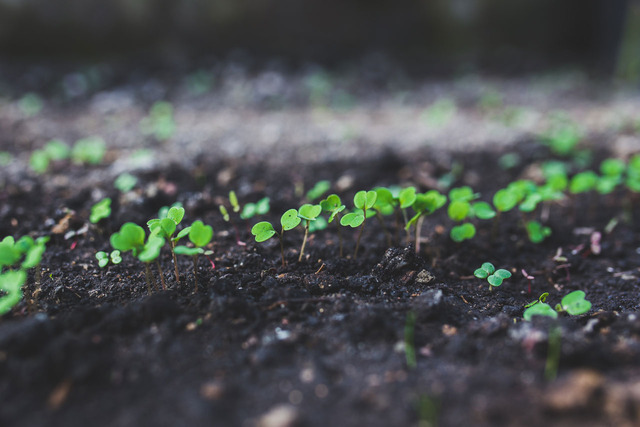
Recently I planted the first of my winter vegetables (broccoli pictured right) and after only five days, they sprouted and I am both surprised and ecstatic! I planted broccoli, cauliflower and I also prepared a bed for my buttercrunch lettuce by adding new fertilizer to the soil but haven't been able to make it home in time before dark to get those seedlings into the ground.

In this post today I am going to cover the basics of winter gardening, how to pick the best vegetables to grow for your area and perhaps add a few snippets of information on some of my favorite winter crops.


It is always best to start at the beginning... 

Winter gardening is not practical everywhere and it certainly isn't easy. There are many things the southern gardener must consider; frost dates, cold winds, and even hard freezes. These weather events can completely devastate an entire crop if you don't take the proper precautions or plan ahead. 
So when do you start planting for the winter and what plants do you choose? These are the first questions you will need to answer and I am here to help!

The first step to determining when and what to plant is to find out which USDA hardiness zone you reside in. The USDA planting/hardiness zone map is a tool used by gardeners to aid them in choosing what type or variety of plant will grow best in their microclimate.
The hardiness map first came about in 1938 and was created by the U.S. National Arboretum and consisted of 8 zones, this map was used until 1960 when a man in the organization named Henry Skinner updated the map changing the correlating temperature variations to a set 10 degrees. This USDA version of the map was much more popular and by 1965 Florida was added to the hardiness map. This map was the industry standard until 1990.
Over the years the map, as most maps do, became less and less accurate due to things like climate change and colonization, in response the USDA added new zones such as Canada and Mexico and added additional levels of zone variation. Each zone stayed separated by a 10 degree variance but gained A and B sections of additional 5 degree variations within the zones making it more accurate than ever before.

Several more years passed and the map underwent different updates of varying significance, some of the most notable in 2006 when a study was released showing the zones were moving northward as climate change caused the earth to warm. In 2012 two more new zones were added to the map and in 2015 the Arbor Day Foundation released an even newer version of the map.
Today the zone map consists of a number system 11 through 0 and those numbers represent the minimum temperatures a plant can withstand within that zone so, for example, if a plant is labeled as hardy in zone 10 then the minimum temperatures it can withstand are -1 °C (30° F) and so on. 
My zone is 8b, north Florida so when I shop for seeds I look on the packaging or within the product information online for varieties that correspond with that zone or are at least in zone 8 or 9. (Note* most gardening websites will let you sort products by zone!) 
To figure out which zone and sub-section of that zone you reside in click here

So we've found your hardiness zone, now what? Picking out your plant and seed babies, of course! This is the fun part. Since primarily we are discussing winter gardening in this article I am going to stick to edibles that grow well in cooler weather only. 
So what are some edibles that enjoy a nice chill or even REQUIRE one? There are actually quite a lot to choose from! Some of these are more cold hardy than others but all of these vegetables do best when grown in cool temperatures.
  • Arugula 
  • Beets
  • Bok choy
  • Broccoli
  • Brussels sprouts
  • Cabbage
  • Collard Greens
  • Cauliflower
  • Celery
  • Chard
  • Fennel
  • Kale
  • Lettuce
  • Onions (bulbing and bunching)
  • Peas
  • Spinach
Alright, so you've picked out the types of vegetables you want to grow, now we need to pick the variety and type. When picking out seeds or seedlings you'll want to pay attention to things like days to harvest (I like to get a few different varieties with different days to harvest to keep a steady supply of vegetables rolling in, alternatively you can plant seedlings a week or so apart), hardiness zone, hours of sunlight, seed type and temperature preferences. You can find all of this information and more on the back of your seed packet or if you are shopping online in the product description. 
For the beginner gardener I would suggest starting out with hybrid varieties or GMO seeds verses no-gmo or heirloom type seeds.

The benefits to using GMO varieties, especially for cold weather gardening, are that they are generally bred to be more resistant to pests, diseases and yes even sudden shifts in temperature. 
Hybrid seeds share a lot of these same protective traits with GMO type seeds and hybrids can produce some of the most interesting and beautiful plants of all! 
The downside? Because hybrid plants are created using cross-pollination you cannot harvest seeds from hybrid plants and get the same plant from those seeds so if you want to grow the same variety again the next year, you will have to purchase the seeds again. This is great for big seed companies, not so much for home gardeners or small farms who want to save seeds for repeated use or sharing. Now you may be thinking, but Jess what if I DO save the seeds and grow them then what happens? The answer is simple, your seeds will likely sprout and produce but the offspring will not be like the hybrid plant you harvest the seeds from, more likely it will be like one of the parent plants the hybrid was created from. 
Example* you have a hybrid flower that is yellow with white stripes and has large dark green leafs. It produces seeds and you plant them, when the plant flowers, the flower it produces is plain white and its leafs are more narrow and lighter in color. The plant may be weaker and less vigorous as well - now it is possible to stabilize hybrid seeds but the process is long arduous one and just in general isn't worth the supreme time and effort involved! 

As you progress on your gardening journey you may want to experiment with heirloom seeds and that is always great fun! Some of my summer favorites are heirlooms and organic varieties like Black Krim tomatoes and Red Burgundy okra. A few of my favorite winter heirloom/organic varieties are Buttercrunch lettuce, Broccoli de Ciccio, and Sicilian Violet Cauliflower.  

Some vegetables are sensitive and you will want to purchase seedlings rather than plants or start them indoors in trays then transplant them into your garden when they're strong enough or displaying true leafs. 
  • Broccoli (In zones 8 - 10 you can sow directly into soil)
  • Cabbage (In zones 9 - 10 you can sow directly into soil)
  • Cauliflower (In zones 8 - 10 you can sow directly into soil)
  • Celery
  • Kale
  • Leeks
  • Most Onions
  • Scallions


Part Three : Pests and Diseases - Coming soon
Part Four : Harvest and Seed Saving - Coming soon

Wednesday, December 27, 2017

Gardening 101 - Part Three : Good Bugs vs Bad Bugs and Common Diseases


In the last installment of Gardening 101 we discussed soil profiles, compost and germination. So now your garden is growing, you have flowers all over your plants and even little fruits here and there when suddenly you spot a huge hole in a leaf on your eggplant, you lean in a little closer and OH MY GOD THAT IS A GIANT GRASSHOPPER. It is easy to see a bug in your garden and get spooked or totally grossed out but learning about what insects are visiting your garden is not only a great way to work on those phobias but it's also a great way to quickly spot problems and beneficial insects can even help you increase your harvest! Insects do a multitude of different things for our environment; they pollinate our plants, areteriate the soil, break down waste and serve as food for wildlife. Today we will discuss non-beneficial insects and beneficial garden insects as well as common diseases that may be plaguing your garden!


Bad bugs and creepy crawlies!


GRASSHOPPERS. Grasshoppers consume approximately one-half of their body weight per day so they can easily decimate an entire crop in one evening . Both adults and nymphs cause damage by chewing on the leaves and stems of plants, and if infestations are severe, may defoliate entire fields. 
Adults (1-2 inch long) are brown to reddish yellow or green in color with prominent jaws, fully developed wings and short antennae. They have enlarged hind legs and can jump great distances. Immature stages — nymphs — are similar in appearance to adults, but are smaller and have wing buds instead of wings. Control: Row covers are the best defense against these pests, I found they only attacked my garden at nighttime and that was also the best time to find them chewing away. Garlic spray and garlic plants are also good deterrents to put in place to ward off grasshoppers. You can also dust the plants with all purpose flour, this gums up the grasshoppers mouths preventing them from eating. 


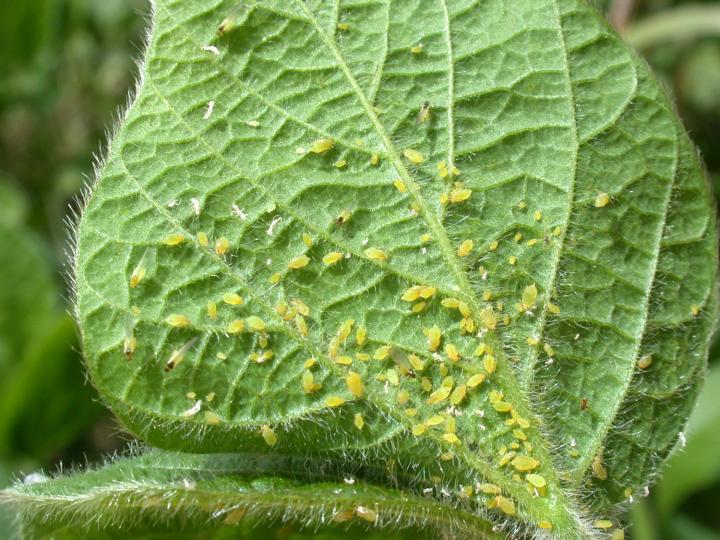
APHIDS. Aphids are small (1/8 inch long), soft bodied, pear-shaped insects that may be green, yellow, brown, red or black in color depending on species and food source. 
They tend to group together toward the base of the plant and on the underside of leafs as pictured left. Aphids secrete a a sticky fluid called honeydew as they eat your plants. This fluid drips onto plants, attracting ants and promoting mold growth on leaves. 
Control: Pruning off affected areas of the plant is an effective removal method if you've found them before the infestation has gotten bad. Another effective method is to turn your hose to its strongest setting and blast the plants with water, follow up with a soap spray and repeat as necessary every few days. Ladybugs also love to pest on this common pest.


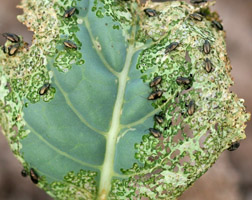
FLEA BEETLES. These bugs cause damage to plants by chewing  small holes in the leaves, which make them look as if they have been shot with a buckshot. They feed most on hot sunny days and attack a wide variety of plants, most plants actually.
Adults are small brown or black beetles with large hind legs that allow them to jump when disturbed much like the common house flea. Flea beetles transmit viral and bacterial diseases so wear gloves when tending to the pest and shake off clothing before entering your home. 
Control: The best way to eliminate these pests is with food-grade diatomaceous earth, this is a nontoxic compound that scorches the body the beetle as it crawls through the fine powder - you can also use this on household fleas and most beetle type pests. Row covers and sticky traps are also very effective in protecting plants from this pest.


SQUASH VINE BORERS. If one day your squash is suddenly wilted and limp, you might have some of these pests in your garden. Larva overwinter in the soil and can work their way into your plants stems, alternatively the adult moth (pictured left) will lay eggs at the base of the plant.
The adult is a moth about ½ inch long that looks a bit like a wasp with a black body, marked with orange-red. The hind wings are transparent and the front wings are metallic green. If you slit open a stem lengthwise with a sharp knife, you will see the borer larva. It resembles a maggot with its fat, white, wrinkled body and brown head; it can grow to about an inch long. 


TOMATO HORNWORMS. Don't let their name fool you, these little jerks will destroy much more than your tomato plants - they also feed on peppers, eggplant and other soft leaf fruit bearing plants. Unfortunately most gardeners don't realize this pest has made its way into the garden until they find a large patch of damage, these guys eat fast. Tomato hornworms are the caterpillar stage of the Sphinx moth (the same type on the cover of Silence of the Lambs) so if you see these moths fluttering around your garden - take action immediately! The caterpillars are 3-4 inches long,  they are green with seven diagonal white strips and a black or red horn projecting from the rear.  In their moth stage they are large (4-5 inch wingspan), heavy-bodied moths. They are gray or brown in color with white zigzags on the rear wings and orange or brownish spots on the body - they fly quickly and are able to hover like a hummingbird over flowers and plants. 

Tip from PlanetNatural: To find the larvae hidden among plants, look for black droppings (frass) on the leaves and ground and spray the foliage with water. The caterpillars will thrash about and give away their hiding spots.

Control:  The best method for removal of this pest is to simply pick it off your plants and either crush it by hand or toss the caterpillars into a bucket of soapy water. (If you have chickens, they love these as a treat!) A very effective caterpillar killer is bacillus thuringiensis (marketed as BT), this organic compound usually comes in powder form and you simply sprinkle it over the plant - however this kills ALL caterpillars and not just pests so if for example you have some lovely monarch caterpillars on your milkweed make sure to keep BT very far away.
My favorite method for dealing with this pest is, we will go into more detail on these wasps in the benefinical section of this article, to use these for prevention you release them early in the the season. The wasps lay their eggs on the hornworm which then feed on the insides of the hornworm until the wasp is ready to pupate, when the wasp bursts from inside the hornworm they will seek out other hornworms to infect and kill. So if you see a hornworm covered in little white bumps (photo right), do NOT kill or remove it from your garden - let the wasps do what they do best! 


Good Bugs! 

BEES. These little guys are easily the most important insect on the planet earth,without bees to pollinate we wouldn't have any of the fruits or vegetables we love so dearly. There are over 20,000 different species of bees in the world and each region has a host of different species native to their area. Bees live in colonies called hives and can fly as far as 2 miles (3 km) from their hive to collect pollen though some beekeepers have seen their bees as far as 4 miles from the hive foraging. 
The honey bee is responsible for approximately 80% of the pollination of fruits, nut, grains, and vegetables in the United States today. Honey bees are not native to North America; they were brought here by European settlers in the colonial days to pollinate their crops and for the products created or gathered by the honey bees-honey, propolis, royal jelly, pollen, and beeswax. Some plants to help attract bees to your garden are; lavender, sage, thyme, mint, sunflowers, rosemary, chives, beebalm, basil, catnip and any other herb or brightly color flowers.


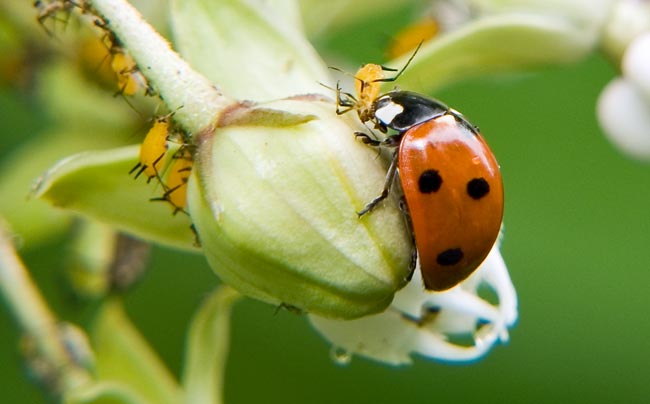
LADYBUGS. These brightly colored insects are every gardeners favorite, instead of feeding on your crop ladybugs feed on aphids, mites, the eggs of pest insects and other various small soft-bodies creepy crawlies. You can buy live ladybugs at almost any organic gardening center or you can order live ladybugs offline for usually less than $20.00 - generally they come in a plastic or cotton container filled with hay, woodchips or straw and to release them into your garden gently shake them loose during a time of day when pest activity is high (usually early morning or early evening as the sun sets), if you are lucky they will thrive in your garden and lay eggs and continue to act as pest-control. Ladybug eggs are bright yellow balls clustered together on the bottom of a leaf or near the plants stem, their larva and pupa are brownish black with yellow spots - leave them be! 

Note from PlanetNatural: Larvae will eat approximately 400 aphids prior to pupating. Adults will consume more than 5,000 aphids during their lifetime. 

What is a Asian ladybug? These are pest insects that are cousins of the common ladybug. It can be hard to tell the difference between the Asian ladybug and beneficial common ladybugs, they are very similar in color though Asian ladybugs have a wilder variety of color in all shades of yellow to orange to red, if you look closely, you will see the Asian lady beetle has a white marking behind its head in the openings of what looks like a black M. Some also have dark black spots like common ladybugs, but  on many their spots are very light or they have none at all. 
During the 1980-90's the USDA released a very large amount of these Asian ladybugs in Southern United States and they reproduced and spread like wildfire. Unlike common ladybugs these Asian beetles can and will occasionally bite humans. These pests also like to find their way into your home and hide in cracks, crevices, drawers and pretty much anywhere they can fit which is everywhere - it is important to avoid smashing them if possible, they release a gooey yellow substance that smells fowl and will attract more Asian ladybugs, some people also are allergic to this substance and can have mild to severe reactions from hives to asthma attacks. 


Here is a fun story from my personal experiences with Asian ladybugs; back in my teenage years, I went on vacation to North Carolina with my then (now ex) boyfriend and his family. His family owned a small cabin up in the smoky mountains and to get to the cabin you must drive up the mountain it's settled on at a 70 degree angle (or at least it felt that way!) all the way until you reached a large gate, it wasn't until you walked around the cabin to the front porch, which all but sat hanging off the side of the mountain, that you realized how high up and tucked away you really were. The cabin was beautiful, wild blackberries grew along the sides of the mountain and when it rained you could watch the dense puffs of steam rise off the mountains, at the time the inside was mostly finished but it was clear there were renovations being done, regardless it had all the charm and coziness you dream of when you think about a tiny mountain cabin. 

So where do the asian ladybugs come in? During the drive from Tennessee to North Carolina, at some point, his mother turned around in her seat and ominously questioned me "have you ever seen 1,000 dead ladybugs?" I, of course, told her no and she explained the mass release by the USDA, how they've become such pests in the region and how without fail every spring when they returned to vacation at the cabin virtually every surface was covered in Asian ladybugs corpses from the winter - the problem is so common that most residents of the area keep their bedding and chairs covered in plastic! I thought this was an exaggeration until I saw it with my own eyes, hundreds of dead ladybugs. They were built up around the windows, in corners and mostly floating in anti-freeze filled toilet and sink. I recall it taking several hours to clean up and each day we were greeted by new ladybugs - probably seeking revenge, if I had to guess. Moral of this story? These things get out of hand quick! Always make sure whatever you plant or release is native to your area and will not overwhelm the local ecosystem. 


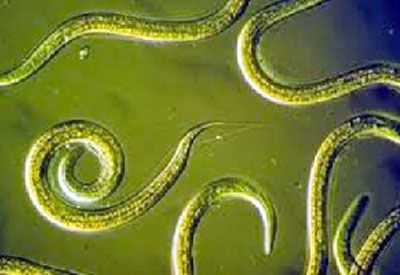
NEMATODE. The question you're probably asking yourself right now is; what the heck is that photo of and what the heck is a nematode? Firstly, those a nematodes under a microscope. Secondly, a nematode is a microscopic parasite closely related to roundworms and threadworms. These little guys are EVERYWHERE, from the lowest valley to the tops of the highest mountains. While some types of nematodes do cause sickness and diseases in humans and animals, the type we are discussing today do not. 
Beneficial nematodes work by actively seeking out and attacking pests that harm plant life, nematodes destroy over 150 different types of insects that live in soil or mature in the ground. These include weevils, beetles including roaches, fleas, borers and gnats.  Beneficial nematodes do not attack earthworms or most other beneficial insects. They’re excellent for use in lawns, in gardens and around trees and shrubs. They need generally moist condition to facilitate their movement. 


PRAYING MANTIS. 
Large, green or tan praying mantis are most often sold as egg cases which can yield up to 200 and more small adults (some pet stores carry single mature adults for housing in terrariums and other enclosed environments). Two to three weeks of warm temperatures allow the eggs to hatch. The newly hatched insects squeeze through the egg sac, leaving it intact and disperse quickly without leaving behind a clue that hatching has occurred. It takes as much as five months for mantises to reach full size.  These critters feed on pests such aphids, leafhoppers, mosquitoes, caterpillars and other soft-bodied insects when young. Later they will eat larger insects such as beetles, roaches, grasshoppers, crickets, moths and even locusts! 


TIPS ON RELEASE FROM PLANETNATURAL:

  • Use 3 egg cases for small areas — under 5,000 sq ft — and increase the amount accordingly for larger areas. 
  • Tie each egg case to twigs or branches about three feet above the ground. Birds and rodents will feed on egg cases. 
  • Placing them in a container with holes large enough for the nymphs to escape — 1/4 to 1/2 inch diameter — will provide protection.


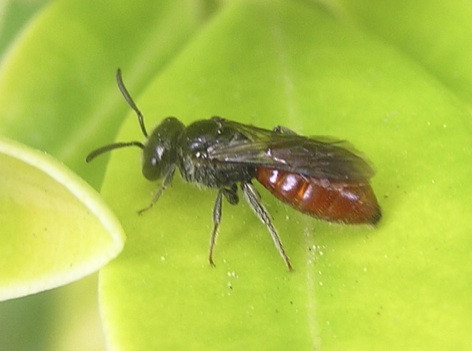
PARASITOID WASPS. Just like there are thousands of different types of bees, there are thousands of different types of wasps. When a gardner refers to parasitoid wasps they could be referring to several different kinds depending on what their pest problem is. Generally speaking these tiny wasps, which are not harmful to humans at all and do not sting, reproduce and act in the same manner. They infect the larva of immature stages of various pests with their own eggs and those eggs feed off the pest until they themselves mature then the adult wasps will seek out more pests to continue the cycle.


Common Plant Diseases   
There are many times when the problems you'll encounter in your garden are not the cause of pests but of different fungi sapping the life from your plants. Here are few of the most common plant diseases and some simple remedies. 


BLOSSOM END ROT: This is a common disease most gardeners, especially busy gardeners, will encounter at least once. This generally occurs on tomatoes but can also affect peppers and other fruits in the nightshade family. 
Blossom end rot is caused by a few different things; a lack of calcium, too much salt, lack of/over watering or rapid growth. This disease manifests itself on both ripe and unripe fruit, soggy spots will appear at the bottom of the fruit (where the blossom was) and will eventually turn brown and ruin the fruit by causing mold or attract pests. This disease will not spread from plant to plant so focus on treating the affecting plants only. To treat and prevent this disease you can; till eggshells or bone meal into the soil before planting (you can purchase calcium sprays from your local garden center too), use chopped leafs, straw or undyed wood chips as mulch to prevent moisture from leaving the soil, and avoid over fertilizing with commercial brand fertilizers that are high in nitrogen.   


RUST: Rust affects many different vegetation, flowers and trees. There are over 4,000 different varieties of rust, rust first appears on the underside of leafs and toward the lower parts of the plant. It is a raised bright golden or orange spots that appear very much like rust, as the fungi grows spores small fuzzy spots in red or black may appear and then will spread via wind to other nearby plants. 
Rust likes warmth, humidity and darkness so making sure your plants get plenty of light and are pruned so air can flow freely is a big help to preventing this fungi. Water in the morning to prevent excess moisture retention and water only at the base of the plant, do not soak the leafs. You should prune off and dispose of effected leafs and stems - DO NOT COMPOST THEM. You can also purchase organic sprays and powders if the disease has gone unchecked for too long. 


POWDERY MILDEW: This is probably the most common fungi in North America, it affects almost all types of plants and is easily identified by powdery white areas on the top of young leafs. The fungi begins as tiny raised bumps near the edges of the leaf causing it to warp and curl before the white powder mildew appears. Prune and destroy effected leafs and plants and make sure plants have good ventilation and air flow to prevent further development. Keep excess yard and plant debris away from young susceptible plants and water in the morning before the heat of the day.


FUSARIUM WILT: I wanted to cover this disease because it is every gardeners worst fear. This disease generally will go unnoticed until it is too late for you to do anything and it can survive for years in the soil. Fusarium wilt is a soil borne pathogen that affects potatoes, tomatoes, peppers and other members of the nightshade family. It enters your plants through the roots and causes the plants leafs to yellow, wither and die. It then slowly works its way up your plant from larger mature leafs to younger leafs. This disease is spread by wind, water, pests and infected gardening tools - unlike some of the other diseases we covered today this one thrives in dry weather with hot temperatures. 
When you notice this disease you should immediately prune effected areas away and sterilized your pruning sheers before using them again - throw the clipping away or destroy them. DO NOT COMPOST FOR ANY REASON. You can purchase sprays and compounds to combat the disease but if you are unable to destroy the disease you should replace the soil in your garden beds or solarize your garden soil. 


VERTICILLIUM WILT: This disease is very similar to fusarium wilt in appearance but unlike fusarium wilt this disease is much more persistent and can survive cold weather and overwinter much more easily. Study has shown that crop rotation is very helpful in the prevention of this disease, since the pathogen develops in the soil it will grow in strength in the same unaltered environment so by rotating crops with more resistant varieties the disease cannot thrive. 


Monday, November 27, 2017

Gardening 101 - Part Two : Soil. Compost. Planting and Garden Maintenance


In the last installment of this gardening series we covered the bare basics - what to plant and how to choose. The advice I gave in the last installment focused primarily on winter gardening, but I  have decided that for the rest of this series I would keep things more general to make it more helpful for everyone everywhere and I'll add winter tips where it is appropriate within the articles.

Today in part two of our gardening 101 series, we will address the following; What is germination? It is necessary? What is soil and how to prepare your soil for planting, what is composting and much more!


Soil and why it's the most 
important aspect of your entire garden..
I dare you to try and find a gardener to believes different! Soil is the base of every healthy and high yield garden. Selecting fertilizers and preparing your soil is an important part of planning your garden. But before we get into the types of soil and what plants grow best in them though let's discuss what soil actually is and what it is so important to not just your garden but also to life itself.


Image: nesoil.com
According to the USDA
"Soil is a natural body comprised of solids (minerals and organic matter), liquid, and gases that occurs on the land surface, occupies space, and is characterized by one or both of the following: horizons, or layers, that are distinguishable from the initial material as a result of additions, losses, transfers, and transformations of energy and matter or the ability to support rooted plants in a natural environment."
So from this definition we can deduce that soil is really just decomposed dead stuff - leafs, rocks, plant matter, fecal matter, and even dead animals arranged in naturally occurring layers, called horizons in earth science.
Soil is a non-renewable resource on earth. It is considered such because it's loss cannot be recovered within a single human lifespan. According to the FAO (the food and agriculture organization of the United Nations) it is estimated that 33% of land is moderately to highly endangered and degraded due to soil erosion, acidification and chemical pollution.
In gardening we concern ourselves mostly with horizon A - topsoil.  Due to the above factors, as well as other local environmental conditions, many gardeners are very picky about where their topsoil comes from - myself included. Very few gardeners are lucky enough to live in an area where flat earth gardening is possible without enriching the soil profile - which can be a process that takes months or even years. So how do we enrich our soil? There are lots of chemical fertilizers you can purchase or industrial composts that will do the trick quickly however we are only focusing on organic alternatives today - they may take longer but it is well worth it in my opinion. Another alternative is in lieu of flat earth gardening, try raised bed gardening. There are many advantages to raised beds especially if you are a beginner gardener or live in an area where your local soil profile isn't ideal for planting, including critter, soil and weed control.


Compost - it's more than just poop!
Composting is a great way to not only recycle your scraps but also to improve your overall soil profile and achieve an ideal loamy* topsoil. The easiest way, for me personally, to tell if compost is good and ready is to smell it, but I don't mean that it smells in a bad way. Good compost smells like earth right before the rain mixed with fresh cut grass. You can use it in several ways; by tilling it into your soil, by dressing the roots of your seedlings during planting or as a mulch to fertilize your mature plants.

Composting is a natural process that occurs when certain aerobic conditions are present. Composting begins process, various microorganisms, including bacteria and fungi, break down organic matter into simpler substances. The effectiveness of the composting process is dependent upon the environmental conditions present within the composting system i.e. oxygen, temperature, moisture, material disturbance, organic matter and the size and activity of microbial populations.
Composting is not a mysterious or complicated process. Natural recycling (composting) occurs on a continuous basis in the natural environment. Organic matter is metabolized by microorganisms and consumed by invertebrates. The resulting nutrients are returned to the soil to support plant growth.

Compost has 4 components green materials, brown materials, water and oxygen.
Greens are materials are rich in nitrogen which your plants need to grow big beautiful green leafs. We call them greens because they are fresh and moist. Examples of greens are; coffee grounds & paper filters, vegetable scraps, fresh plants & leafs, grass clippings and manure (preferably cow, rabbit or horse)
Browns are materials that are rich in carbon which is needed to break down the materials you add to the pile. Carbon is what feeds the microbes that aid in natural decomposition. Examples of browns are; dead leafs, old bread, straw & hay, wood chips, undyed hair clippings, dryer lint and eggshells. 
There are certain materials you may think would be fine to add to your compost pile but a few of the things you should NOT compost are; weeds. charcoal, diseased plants, cat & dog manure/urine, meat scright, bone, dai90 products and chemical treated lumber & sawdust.

There are two types of composting hot and cold.
Hot composting is the most common type of composting, it involves using 2 parts carbon to 1 part nitrogen which causes the pile to literally heat up. If this is done correctly your compost pile will reach temperatures up to 155° F within 24-48 hours. A hot compost generally yields usable compost within a matter of weeks. 
In hot composting you will need to turn your pile at the least once weekly. Additionally you should make sure to maintain it's dampness levels close to that of a rung out washcloth - the more frequently you turn your pile and allow more oxygen to enter the faster the process.
Cold composting requires very little effort but can take upwards of a year depending on the size of your compost pile to produce useable compost. To cold compost you add your greens and browns as you acquire them, I recommend chopping up your materials to accelerate the rate of decomposition. Cold composting is right for you if you have lots of space and little time to tend to your compost pile.


 Germination before planting - when and why?


Germination is the process by which seeds develop into seedlings and then into plants. Seeds undergo germination when they are planted at the correct dept in soil, under the correct temperature and under the correct moisture conditions. During germination the seed soaks up water in a process called imbibition*, that process activities certain protein enzymes which cause the seeds to develop into a seedling then into a plant.

There are many factors that can influence seed germination but the most important are water, light and temperature. The seeds must remain moist enough to go through imbibition but if they are too moist they may not develop correctly and can be "drowned". 

Temperature can be tricky, the temperatures at which you seeds will germinate depend very much on what kind of seeds they are. Some seeds need cold weather to germinate such as broccoli, blueberry and other northern plants. On the other hand some plants need extreme heat to germinate like pine after forest fires. Additionally the seeds must receive enough light so that the shoot pierces the soil and develops proper leafs, some plants however require total darkness to germinate then may be moved into different lighting conditions. This is information you'll usually find on your seed packets or under product description.


So how do you know if you need to germinate your seeds before planting in the garden? Generally the package will tell you, but a quick google search can never hurt. I recommend checking the farmers almanac website. Other reasons for germination prior to planting are climate, if you live somewhere with long winters you may choose to use a greenhouse to jump start your growing season.
Many vegetables do best or even require you to germinate your seeds outside of the garden bed in trays then they are transplanted into the garden when they are strong enough - examples are; eggplant, tomatoes, peppers, onions, kale and more. Some vegetables will easily germinate without assistance other than watering when the seed is planted directly into the ground - examples are squash, beans, carrots, peas and spinach. 


Garden Maintenance and Watering..


Your garden needs your attention, just like your home and pets. Neglecting your garden will lead to lower yields, pest problems, weed problems or even the loss of an entire harvest. I use my planner and journal to track my garden maintenance, I will attach a simple SPRING check-list that I found very helpful prior to my planner obsession. You may print and utilize this list by clicking here

Depending on your climate and what you're growing you may need to water certain plants more frequently than others (if you live in a very hot climate for example) but in general your plants will want about 1-2 inches of water per week. 
It is very important to water your plants regularly, preferably at the same time of day each day if possible. 
If your plants don't get enough water they may not fill out properly and may be too thin or large on one end and small on the other. Tomatoes will crack if they receive a sudden influx of watering after a long period of neglect. You should also take note and only water at the base of the plant, avoid saturating the leafs or fruits with water as this came increase pest activity and also cause fungi or mold problems.
Other common maintenance is weeding your garden bed, this is important because weeds steal food and water from your plants inhibiting growth and sometimes fruit production. Mulching your plants is beneficial for a few reasons, it helps keep soil moist, slows down weed growth and keeps the plants roots from overheating or being exposed to pests. You should mulch your plants seasonally with compost, shredded leafs or other organic mulches - NEVER use wood chips to mulch your garden. Wood chips contain dyes, chemicals and often mushroom spores. Other garden maintenance you'll want to keep up with is  checking or signs of pest activity, trimming dead limbs, harvesting your 


Part Two : Soil, Compost, Planting and Garden Maintenance
Part Three : Pests and Diseases - Coming soon
Part Four : Harvest and Seed Saving - Coming soon

*Imbibition: A special type of diffusion when water is absorbed by solids-colloids causing an enormous increase in volume. Examples include the absorption of water by seeds and dry wood.
*loamy: The type of soil that gardens and gardeners love is loamy soil. It contains a balance of all three soil materials—silt, sand and clay—plus humus. It has a higher pH and calcium levels because of its previous organic matter content. Loam is dark in color and is mealy—soft, dry and crumbly—in your hands. It has a tight hold on water and plant food but it drains well, and air moves freely between soil particles down to the roots.


Sources: nesoil, FAO offical, the free range life, agverra, the farmers almanacdeep green permaculture

Thursday, June 21, 2018

Wheel of the Year - Litha


Litha or Midsummer occurs during the Summer Solstice. It is the longest day of the year and the shortest night, this is the peak of the Solar year and the Sun is at the height of power. Across the land flowers are in full bloom and the crops are reaching maturity as the harvest quickly approaches. Litha is a time of joy, happiness and celebration. Today we will discuss the history and lore of Litha and how you can celebrate with us at home.


HISTORY AND LORE

Litha or Midsummer is the Pagan celebration of the summer solstice. It is one of the four cross-quarter days and one of the four lesser Sabbats. It is the longest day of the year and the shortest night - on this day the light overpowers the darkness for the last time in the wheel of the year making it the perfect time for rituals of renewal, protection, and power.

In eastern European lore it is on this day in the story of the twins known as the Oak King and the Holly King, the two brothers battle and the Oak King yields to the Holly King who begins his reign as the darkness of winter and the longest night approach. In the Pagan community we refer to the day as Litha, meaning the opposite of Yule, or as Midsummer, because in the Celtic year Summer officially starts at Beltane and ends on Lughnassahd with this day falling directly in the center of the two.

Like with many Pagan celebrations there was eventually created a Christian counterpart. For those of the Christian faith this the celebration of John the Baptist. The Christian church began this yearly celebration after realizing how ingrained the festivals of this day were within the newly converted Ex-Pagan community. In the 7th century, a Saint by the name of Eligius warned them against these pagan solstice celebrations believing them dangerous and sinful. So began the Christianization of Midsummer which eventually became the feast of Saint John the Baptist, unlike other saints' days which usually occur on the day of their martyrdom, this feast is celebrated on the day of his birth. It is one of the few saints' days that will be celebrated regardless of if falls on a Sunday whereas typically the practice is to suspend the feast.


RITUAL AND OBSERVANCE

Beltane and Spring have given way to the maturity and heat of the Summer and so too do the God and Goddess. The Goddess is mature and glowing as her belly has grown large from the seed the God planted at Beltane, soon she will give birth. She is the apex of Motherhood and the earth is potent with her life giving energy. The God also changes during this time, he is the Father and slowly he begins to turn towards the realm of shadow.


Many of Litha's traditions center around fertility and celebrate the bounty and maturity of summer. Fire/rebirth being the central element of the Sabbat we often celebrate through rituals that burn, purify and shed. It is believed that herbs and plants harvested during Midsummer yield stronger energies and special power.

Easy ways to celebrate at home:
  • Berry or fruit picking! Many U-PICK farms are opened across the northern hemisphere this time of year and this is a great family friendly way to celebrate summers bounty.  
  • Bake a fruit pie. 
  • Make arts and crafts using natural materials gathered from outdoors. Flower crowns, witches ladders or wickerman dolls are common examples.
  • Celebrate with friends and family around a balefire by jumping the fire (or cauldron) and through song or dance.
  • Light a candle and keep it lit in a window throughout the day and into the evening, meditate on the flame or say a Litha prayer over the candle. 
  • After the sun begins to fall below the horizon light candles or a balefire and allow it to burn out on it owns. 
  • Watch the sunset and meditate on the light of summer as well as the coming darkness. 
  • Pick and hang herbs for drying. 
  • Go on a walk around your neighborhood or a hike through the woods and observe the maturity of the plants and full bloom of the summer flowers. (Don't forget to bring a bag and pick up garbage you find along the way!)
  • Host a barbecue or cook on an opened fire. 


CORRESPONDANCES


SYMBOLS: Fire, oak trees, sun dials, sun wheels, swords, 
fruits, shells
COLORS: White, gold, yellow, red, orange, blue, green
ANIMALS: Robins, cattle, dragonflies, horses, sea creatures
GODDESSES: All mother goddesses, Gaia, Venus, Astarte, Freya, Demeter 
GODS: Apollo, Ra, Ares, all Sun gods. 
INCENSE: Sage, mint, basil, pine, roses, lavender
CANDLES:  White, red, orange, yellow, gold, blue, green
PLANTS: Sunflowers, peony, roses, honeysuckle, daisy, hibiscus
STONE: emerald, jade, bloodstone, topaz, clear quartz
ALTAR DECOR: Fresh cut flowers, herbs, seashells, blades, oak
FOODS: Smoked meats, spicy foods, fresh fruits, mead, honey, wine, fresh vegetables

Monday, October 30, 2017

The Wheel of the Year - Samhain


Samhain has always been one of my favorite Sabbats, the air is chilly and you can smell the burning of wood from the seasons first fires floating from their hearths and wafting through the crisp night air. It is time for us for remember and honor those who have passed, celebrate our successes from the past year, plan for the new year and  prepare for the long winter and dark nights ahead of us until the Sun God is reborn again during the Winter Solstice. 
 My hope for this blog is not only that I entertain you but also that I am able to educate you on a variety of different topics, traditions and holidays that I may have more of or a different perspective on. I figured - well, heck, what better Sabbat to start on than Halloween! 

HISTORY :
Before we get into the ritual/observance aspects of the holiday, let's discuss it's history first. Samhain (pronounced sow-ween or sow-win and translated meaning "summers end") is the Witches New Year and one of the four greater Sabbats; you may know it by another name like Halloween, Day of the Dead, Spirits Night, Hallows Night, or All Hallows Eve. In the northern hemisphere, many Witches celebrate Samhain from dusk on October 31st through dusk on November 1st though many modern witches in the US and Canada just stick with the Oct 31st date.
    During the rise of Christianity as the dominant religion throughout Europe, Samhain was given new Christian names and guises to make the religious conversion of early Pagans easier. "All Saints' Day" on November 1st was created to commemorate Christian saints and martyrs. It is followed thereafter by "All Souls' Day" which is celebrated on November 2ed and was created as a time to honor or to pray for the souls of the dead.
    Shortly after the migration of Christian Spaniards to Mexico, the indigenous customs honoring the dead mixed with the Roman Catholic customs and gave birth to the Day of the Dead, Dia de los Muertos, which is celebrated in early November throughout many towns and cities in Mexico today.
    Although occurring at the same time of year (even the same day depending on who you ask) and having roots in end-of-harvest celebrations, Halloween and Samhain are in fact two separate holidays that differ considerably in focus and in practice. In contemporary America, Halloween has evolved to be both a family-oriented children's holiday as well as an occasion for those of all ages to creatively express themselves and engage in play in the realm of make-believe and fantasy through costumes, trick-or-treating, storytelling, play-acting, pranks, horror movies, haunted houses, and parties.

SAMHAIN AND DEATH: 

    Samhain is the Celtic New Year, and the highest holy day for Witches. Samhain signifying the end of the yearly cycle begins the inauguration of Winter, it is our final opportunity to harvest and to dry herbs for winter storage. With so much of this holiday revolving around the end of things, it comes as no surprise that death is an integral part of the Sabbat. Vegetation dies back with the first frosts, trees shed the last of their leafs, and literally, death is in the air. 
This helps us understand the ancient notion that at Samhain, the veil is thin between the world of the living and the Dead. For those who have lost loved ones in the past year, Samhain rituals can be an opportunity to bring closure to grieving.

RITUAL AND OBSERVANCE: 

   Samhain is not just a time of death and endings, it is also a time of new beginnings. This is a good point in the year for personal reflection, (the death of the old self is a common theme for the holiday) and for recognizing our flaws and failures while also creating methods for rectifying them in the coming year. 
   In many Celtic countries the Sabbat was observed by leaving food offerings on altars and doorsteps for wandering spirits. Today many practitioners still carry out this tradition, more commonly known as "Hecate Suppers". Other traditions include leaving a single candle lit and left in the window to help guide the spirits of ancestors and loved ones home, extra chairs are set at the table and around the hearth for any spirits visiting the family, and turnips (these days we use pumpkins) were  hollowed out and carved to look like protective spirits and scare away fairies and evil beings. 
    We still observe many of these old traditions today, and in modern times we have even created a few of our own! There is no wrong way to participate in this Sabbat but here are of few of my personal favorites.


  • Nature Walk. Take a meditative walk in a natural area near your home. Observe and contemplate the colors, aromas, sounds, and other sensations of the season. Experience yourself as part of the Circle of Life and reflect on death and rebirth as being an important part of Nature. If the location you visit permits, gather some natural objects and upon your return use them to adorn your home.
  • Seasonal Imagery. Decorate your home with Samhain seasonal symbols and the colors of orange and black. Place an Autumnal wreath on your front door. Create displays with pumpkins, cornstalks, gourds, acorns, and apples. 
  • Ancestors Altar. Gather photographs, heirlooms, and other mementos of deceased family, friends, and companion creatures. Arrange them on a table, dresser, or other surface, along with several votive candles. Kindle the candles in their memory as you call out their names and express well wishes. Thank them for being part of your life. Sit quietly and pay attention to what you experience. Note any messages you receive in your journal. This Ancestors Altar can be created just for Samhain or kept year round.
  • Feast of the Dead. Prepare a Hecate Supper and place it on your porch or doorstep. Alternatively, include a place setting at your table for spirits visiting home, add an offering of a bit of each beverage being consumed to the cup at that place setting, and to the plate, add a bit of each food served. Invite your ancestors and other deceased loved ones to come and dine with you, after the feast, place the contents of the plate and cup for the Dead outdoors in a natural location as an offering.
  • Cemetery Visit. Visit and tend the gravesite of a loved one at a cemetery. Call to mind memories and consider ways the loved one continues to live on within you. 
  • Reflections. Reflect on you and your life over the past year. Review journals, planners, photographs, blogs, and other notations you have created during the past year. Consider how you have grown, accomplishments, challenges, adventures, travels, and learnings. Meditate. Journal about your year in review, your meditation, and your reflections.
  • Renovate. Select an area of your home or life as a focus. Examine it. Re-organize it. Release what is no longer needed. Create a better pattern. Celebrate renewal and transformation.
  • Bonfire Magic. Kindle a bonfire outdoors when possible or kindle flames in a fireplace or a small cauldron. Write down an outmoded habit that you wish to end and cast it into the Samhain flames as you imagine release. Imagine yourself adopting a new, healthier way of being as you move around the fire clockwise.
  • Divine Invocations. Honor and call upon the Divine in one or more Sacred Forms associated with Samhain, such as the Crone Goddess and Horned God of Nature. Invite Them to aid you in your remembrance of the Dead and in your understanding of the cycle of life, death, and rebirth. If you have lost loved ones in the past year, ask these Divine Ones to comfort and support you.

CORRESPONDANCES: 

SYMBOLS: Black cats, Pumpkins, Bats, Owls, Scarecrows, Brooms, Keys
GODDESSES: All Crone Goddesses, Cerridwen, Hecate, Hel, Oya, the Morrigan, Lilith, Kali, Ishtar, Arianrhod, Rhiannon, Tlazoteotl, Nephthys, Persephone, Beansidhe (Banshee), Inanna, Baba Yaga, Isis, Pomona and Cailleach Beara (Brigid's crone aspect)
GODS: Osiris, the Horned God, Herne the Hunter, Cernunnos, Anubis, Odin, Bran, Death Gods
INCENSE: Clove, sandalwood, mint, cinnamon, and sage.
CANDLES: Black, orange, brown, beeswax, white.
TOOLS: Besom, to sweep out the old year and any negativity it had. Cauldron, for transformation.
PLANTS: Pumpkin, apple, grain, pomegranate, mugwort, wormwood, acorn, oak leaf, gourds, root vegetables
STONE: Obsidian, carnelian, onyx, smoky quartz, jet, bloodstone.
ALTAR DECORATIONS: Autumn leaves, fall flowers, pomegranates, apples, pumpkins, ears of corn, sprays of grain, corn dollies, gourds, nuts, seeds, acorns, chestnuts and images of ancestors are all appropriate. Use whatever is in season where you live.
FOOD: Gingerbread, freshly roasted nuts, pumpkin pie, nut breads, anything made with apples or pumpkin, meat (especially bacon), doughnuts, popcorn, red wine, mead.


Scorces: here 
Image of candles in store is: here