


In the last installment of this gardening series we covered the bare basics - what to plant and how to choose. The advice I gave in the last installment focused primarily on winter gardening, but I have decided that for the rest of this series I would keep things more general to make it more helpful for everyone everywhere and I'll add winter tips where it is appropriate within the articles.
Today in part two of our gardening 101 series, we will address the following; What is germination? It is necessary? What is soil and how to prepare your soil for planting, what is composting and much more!
Soil and why it's the most
important aspect of your entire garden..
I dare you to try and find a gardener to believes different! Soil is the base of every healthy and high yield garden. Selecting fertilizers and preparing your soil is an important part of planning your garden. But before we get into the types of soil and what plants grow best in them though let's discuss what soil actually is and what it is so important to not just your garden but also to life itself.
 So from this definition we can deduce that soil is really just decomposed dead stuff - leafs, rocks, plant matter, fecal matter, and even dead animals arranged in naturally occurring layers, called horizons in earth science.
Soil is a non-renewable resource on earth. It is considered such because it's loss cannot be recovered within a single human lifespan. According to the FAO (the food and agriculture organization of the United Nations) it is estimated that 33% of land is moderately to highly endangered and degraded due to soil erosion, acidification and chemical pollution.
In gardening we concern ourselves mostly with horizon A - topsoil. Due to the above factors, as well as other local environmental conditions, many gardeners are very picky about where their topsoil comes from - myself included. Very few gardeners are lucky enough to live in an area where flat earth gardening is possible without enriching the soil profile - which can be a process that takes months or even years. So how do we enrich our soil? There are lots of chemical fertilizers you can purchase or industrial composts that will do the trick quickly however we are only focusing on organic alternatives today - they may take longer but it is well worth it in my opinion. Another alternative is in lieu of flat earth gardening, try raised bed gardening. There are many advantages to raised beds especially if you are a beginner gardener or live in an area where your local soil profile isn't ideal for planting, including critter, soil and weed control.
Composting is a great way to not only recycle your scraps but also to improve your overall soil profile and achieve an ideal loamy* topsoil. The easiest way, for me personally, to tell if compost is good and ready is to smell it, but I don't mean that it smells in a bad way. Good compost smells like earth right before the rain mixed with fresh cut grass. You can use it in several ways; by tilling it into your soil, by dressing the roots of your seedlings during planting or as a mulch to fertilize your mature plants.
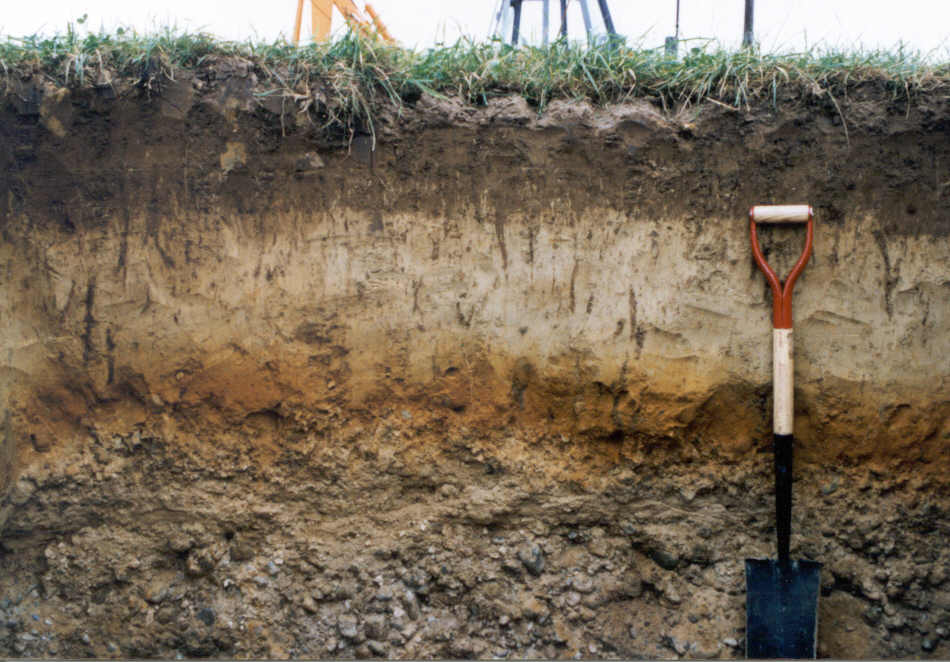 |
| Image: nesoil.com |
According to the USDA:
"Soil is a natural body comprised of solids (minerals and organic matter), liquid, and gases that occurs on the land surface, occupies space, and is characterized by one or both of the following: horizons, or layers, that are distinguishable from the initial material as a result of additions, losses, transfers, and transformations of energy and matter or the ability to support rooted plants in a natural environment."
So from this definition we can deduce that soil is really just decomposed dead stuff - leafs, rocks, plant matter, fecal matter, and even dead animals arranged in naturally occurring layers, called horizons in earth science.Soil is a non-renewable resource on earth. It is considered such because it's loss cannot be recovered within a single human lifespan. According to the FAO (the food and agriculture organization of the United Nations) it is estimated that 33% of land is moderately to highly endangered and degraded due to soil erosion, acidification and chemical pollution.
In gardening we concern ourselves mostly with horizon A - topsoil. Due to the above factors, as well as other local environmental conditions, many gardeners are very picky about where their topsoil comes from - myself included. Very few gardeners are lucky enough to live in an area where flat earth gardening is possible without enriching the soil profile - which can be a process that takes months or even years. So how do we enrich our soil? There are lots of chemical fertilizers you can purchase or industrial composts that will do the trick quickly however we are only focusing on organic alternatives today - they may take longer but it is well worth it in my opinion. Another alternative is in lieu of flat earth gardening, try raised bed gardening. There are many advantages to raised beds especially if you are a beginner gardener or live in an area where your local soil profile isn't ideal for planting, including critter, soil and weed control.
Compost - it's more than just poop!

Composting is not a mysterious or complicated process. Natural recycling (composting) occurs on a continuous basis in the natural environment. Organic matter is metabolized by microorganisms and consumed by invertebrates. The resulting nutrients are returned to the soil to support plant growth.
Compost has 4 components green materials, brown materials, water and oxygen.Greens are materials are rich in nitrogen which your plants need to grow big beautiful green leafs. We call them greens because they are fresh and moist. Examples of greens are; coffee grounds & paper filters, vegetable scraps, fresh plants & leafs, grass clippings and manure (preferably cow, rabbit or horse)
Browns are materials that are rich in carbon which is needed to break down the materials you add to the pile. Carbon is what feeds the microbes that aid in natural decomposition. Examples of browns are; dead leafs, old bread, straw & hay, wood chips, undyed hair clippings, dryer lint and eggshells.
There are certain materials you may think would be fine to add to your compost pile but a few of the things you should NOT compost are; weeds. charcoal, diseased plants, cat & dog manure/urine, meat scright, bone, dai90 products and chemical treated lumber & sawdust.
 There are two types of composting hot and cold.
Hot composting is the most common type of composting, it involves using 2 parts carbon to 1 part nitrogen which causes the pile to literally heat up. If this is done correctly your compost pile will reach temperatures up to 155° F within 24-48 hours. A hot compost generally yields usable compost within a matter of weeks.
In hot composting you will need to turn your pile at the least once weekly. Additionally you should make sure to maintain it's dampness levels close to that of a rung out washcloth - the more frequently you turn your pile and allow more oxygen to enter the faster the process.
Cold composting requires very little effort but can take upwards of a year depending on the size of your compost pile to produce useable compost. To cold compost you add your greens and browns as you acquire them, I recommend chopping up your materials to accelerate the rate of decomposition. Cold composting is right for you if you have lots of space and little time to tend to your compost pile.
Germination before planting - when and why?

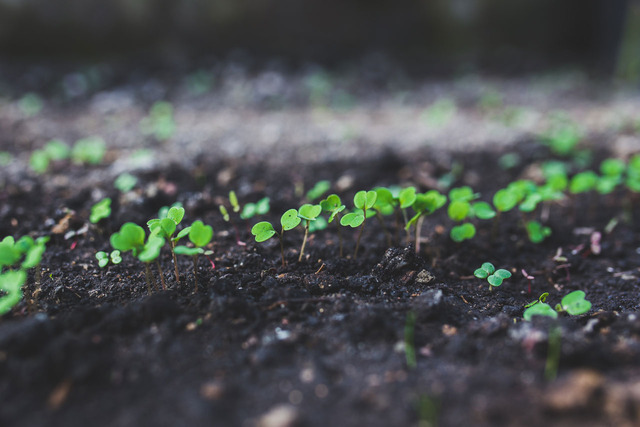
Germination is the process by which seeds develop into seedlings and then into plants. Seeds undergo germination when they are planted at the correct dept in soil, under the correct temperature and under the correct moisture conditions. During germination the seed soaks up water in a process called imbibition*, that process activities certain protein enzymes which cause the seeds to develop into a seedling then into a plant.
There are many factors that can influence seed germination but the most important are water, light and temperature. The seeds must remain moist enough to go through imbibition but if they are too moist they may not develop correctly and can be "drowned".
Temperature can be tricky, the temperatures at which you seeds will germinate depend very much on what kind of seeds they are. Some seeds need cold weather to germinate such as broccoli, blueberry and other northern plants. On the other hand some plants need extreme heat to germinate like pine after forest fires. Additionally the seeds must receive enough light so that the shoot pierces the soil and develops proper leafs, some plants however require total darkness to germinate then may be moved into different lighting conditions. This is information you'll usually find on your seed packets or under product description.

So how do you know if you need to germinate your seeds before planting in the garden? Generally the package will tell you, but a quick google search can never hurt. I recommend checking the farmers almanac website. Other reasons for germination prior to planting are climate, if you live somewhere with long winters you may choose to use a greenhouse to jump start your growing season.
Many vegetables do best or even require you to germinate your seeds outside of the garden bed in trays then they are transplanted into the garden when they are strong enough - examples are; eggplant, tomatoes, peppers, onions, kale and more. Some vegetables will easily germinate without assistance other than watering when the seed is planted directly into the ground - examples are squash, beans, carrots, peas and spinach.
Many vegetables do best or even require you to germinate your seeds outside of the garden bed in trays then they are transplanted into the garden when they are strong enough - examples are; eggplant, tomatoes, peppers, onions, kale and more. Some vegetables will easily germinate without assistance other than watering when the seed is planted directly into the ground - examples are squash, beans, carrots, peas and spinach.
Garden Maintenance and Watering..

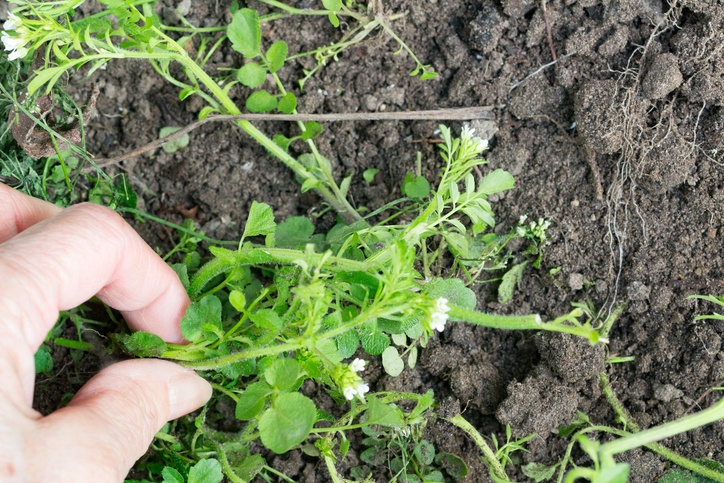
Your garden needs your attention, just like your home and pets. Neglecting your garden will lead to lower yields, pest problems, weed problems or even the loss of an entire harvest. I use my planner and journal to track my garden maintenance, I will attach a simple SPRING check-list that I found very helpful prior to my planner obsession. You may print and utilize this list by clicking here.
Depending on your climate and what you're growing you may need to water certain plants more frequently than others (if you live in a very hot climate for example) but in general your plants will want about 1-2 inches of water per week.
It is very important to water your plants regularly, preferably at the same time of day each day if possible.
If your plants don't get enough water they may not fill out properly and may be too thin or large on one end and small on the other. Tomatoes will crack if they receive a sudden influx of watering after a long period of neglect. You should also take note and only water at the base of the plant, avoid saturating the leafs or fruits with water as this came increase pest activity and also cause fungi or mold problems.
Other common maintenance is weeding your garden bed, this is important because weeds steal food and water from your plants inhibiting growth and sometimes fruit production. Mulching your plants is beneficial for a few reasons, it helps keep soil moist, slows down weed growth and keeps the plants roots from overheating or being exposed to pests. You should mulch your plants seasonally with compost, shredded leafs or other organic mulches - NEVER use wood chips to mulch your garden. Wood chips contain dyes, chemicals and often mushroom spores. Other garden maintenance you'll want to keep up with is checking or signs of pest activity, trimming dead limbs, harvesting your
Part Two : Soil, Compost, Planting and Garden Maintenance
Part Three : Pests and Diseases - Coming soon
Part Four : Harvest and Seed Saving - Coming soon
*Imbibition: A special type of diffusion when water is absorbed by solids-colloids causing an enormous increase in volume. Examples include the absorption of water by seeds and dry wood.
*loamy: The type of soil that gardens and gardeners love is loamy soil. It contains a balance of all three soil materials—silt, sand and clay—plus humus. It has a higher pH and calcium levels because of its previous organic matter content. Loam is dark in color and is mealy—soft, dry and crumbly—in your hands. It has a tight hold on water and plant food but it drains well, and air moves freely between soil particles down to the roots.
Sources: nesoil, FAO offical, the free range life, agverra, the farmers almanac, deep green permaculture


