Tuesday, April 2, 2019

Propagating Succulents like a Pro - Easy DIY Gardening Project


Succulents are fun, colorful and easy to grow as long you give them the correct conditions! In the right climate they require very little care, in the wrong climate they can be notoriously stubborn and fickle. Today we will briefly cover different types of succulents, how to care for one and finally how to propagate your own succulents at home!

What is a succulent?
Succulents are easily recognized by their thick fleshy, often colorful, leafs which similar to cacti they use to store water during dry periods. Succulents exist among many different plant families including Aizoaceae, Cactaceae, Crassulaceae and many more. These plants thrive in dry climates and can survive with little rainfall or even an occasional misting if it's humid enough. One of the most common mistakes people growing succulents for the first time make is over watering - it may seem counterintuitive but these plants enjoy a bit of neglect, which we will cover in the next section.

How do I care for my succulents?
Succulents need bright indirect light for at least half of the day. (Tip* If growing indoors use a south facing window when possible!) Indirect light can be a bit hard to understand for novice plant owners,  indirect light occurs when a plant is in bright sunlight yet the sunlight is not falling directly on the plants foliage. One way to achieve this indoors is by using sheer curtains or wide opened blinds. Outdoors this can be achieved many different ways but you'll ideally want to find a spot that receives bright morning sun but is shaded by the late afternoon. Your succulents will let you know if they want more sunlight, they'll do this by growing taller and appearing "leggy" with larger spaces between the normally tight uniform leafs.

When it comes to water, these plants do not need much. I recommend checking the soil about once a week, longer if you live in a cooler humid climate. Allow your succulent plant to completely dry out before watering. When the soil is dry, water the plants soil thoroughly allowing the water to drain out completely - it is important that you do not allow your succulents to sit in water. Avoid soaking the leafs when watering as it can cause rot, water from the bottom when possible. If your climate is very dry, occasional misting will not hurt the plant.


Alright, I haven't killed it yet - how do I propagate more?
Succulents are one of the easiest, in my opinion, plants to propagate especially if its your first adventure into the world of plant propagation. There's no waiting months for roots to appear in water then praying that your plant takes to its new home in soil. (I'd like to note you actually CAN propagate most succulents in water, I've personally had little success with that method so it isn't what we are discussing today.) With succulents, the new plant just appears on the leaf or grows from a cutting, you pluck it off and put it in some soil then you're done! Sounds easy, right? It totally is! There are a few things you'll need to know though and some tricks you'll want to learn before you start your own succulent nursery.

First you'll want to know what kind of succulent you have. There are so many different genus of succulents that I cannot possibly discuss them all in this article so I will over the three I tend to see most commonly sold in nurseries near me which are Echeverias, Sedums and Aeoniums.

Echeveria photo from 123RF.com
Echeverias are known for their attractive opened rosette shape, often grown alone but also in clumps. They range in color from green to blue to red and every shade in between. Some of the most popular varieties of Echeveria are ‘Sagitta’, Echeveria ‘Green Abalone’ Echeveria ‘Latte Rose’ (Brown Ghost Plant) and Echeveria ‘Orion’. (Click here to view more echeveria!)
Sedum photo from costafarms.com
Sedums often have rounder fleshy leaves than echeveria and while some varieties can grow in a similar rosette pattern to echeveria, sedums also come in many other shapes and sizes too making them extra popular for adding texture to an opened air terrarium, hanging baskets or even as pariennal borders. My personal favorite is "donkey tail" (Sedum morganianum) a hanging succulent! Other popular sedums include Graptosedum ‘Francesco Baldi’ and Sedum ‘Little Missy’ – Little Missy Sedum. (Click here to view more sedums!)
Aeonium photo from worldofsucculents.com
Aeoniums can be easily confused with echeveria in that they too most commonly grow in a rosette formation. To help tell them apart take note of the stem, the stem of aeoniums are thicker and often grow "leggy". The leaf is attached to the stem by a thin membrane so when a leaf is plucked off it leaves only a small mark and the stem stays fully intact while when a leaf is plucked from an echeveria this membrane doesn't exist and there should be a small concave or divot in the stem. Some important things to know about this genus of succulents is that they die after flowering and cannot be propagated from a leaf but must be propagated from the stem. Popular aeoniums include Aeonium lancerottense, Aeonium mascaense and Aeonium aureum (Green Rose Buds)


What you'll need:
  • A flat pan or container with raised edges (a normal pot works just as well, use what you have)
  • Succulent/cacti soil (store bought or home made)
  • Sharp sheers or scissors
  • A spray bottle filled with distilled water

Part One - Leaf Removal 
To remove the leaf for probogation from your plant gently twist and pull the leaf away from the mother plants stem. I find this method to be the most fool proof though you can also use sharp scissors or sheers to remove the leaf. Make sure to severe the leaf as close to the stem as possible.
Beheading is often done when a plant becomes too large for its pot, its leafs begin lacking uniformity, or its stem has grown long and leggy. When you behead the plant you remove the whole leafy 'head' of the stem leaving roughly about an inch of stem attached to the head for root formation. You can also leave the stump of beheaded plant in its pot and new growth will eventually form there as well!

Part Two - Dry it out!
Image from: shmarz at snapguides.
This is probably the most important step - LET THE LEAF/CUTTING CALLUS OVER! A plants callus is essentially the same as a human callus, its an accumulation of soft tissue cells that form over an opened wound and allow the healing process, or in this case the growth process, to begin!

Succulents MUST have this callus to grow properly. The most simple method is for your succulent leafs or cutting to be left out to air dry so they can form a callus at the point where it was removed from the mother plant. This callus seals the moisture inside and prevents extra water from being absorbed, it is also where new roots and new leafs will form. If you do not allow the callus to form your succulent leafs will absorb too much water too quickly and will eventually turn brown and soft then slowly rot away. I find 48 to 72 hours is the ideal timeframe to allow a callus to form, this time may vary depending on your climate. Experiment and find out what works for you! The image to your left shows an example of what a proper callus on a succulent looks like. It will be white or brown in color and solid.


Part Three - Placement & Watering.
Now you can propagate your succulents directly in water but today we are discussing the soil method. Fill your selected container with your succulent/cacti soil mix and smooth out the top of your soil. (See photo, right.) Place your succulent leafs directly on top of the soil, take care that the callused ends do not actually make contact with the soil. (See photo, left/below.)

A mature fully grown succulent doesn't require frequent watering - that's why we all love them, right? Your succulent leaf cuttings will, however, need quite a bit more water. What works best for me is a simple plastic spray bottle (I just picked one up from the dollar store) filled with distilled water. You are going to spray down your succulent leafs and soil with water each time the soil becomes dry. Try not to over saturate the leafs but make sure the soil is consistently nice and moist.
If you've opted for beheading you can place the nub of your succulent directly into soil and water thoroughly. Since these are already almost fully grown succulents roots should quickly begin to form underground. Water your now potted cutting each time the soil is dry until you see new growth, at that point you can cut back watering and treat it as any other mature succulent.


Part Four - Roots and Planting.
Now we wait... and wait.. and wait... and OH, IS THAT A ROOT? Eventually, usually in about 2 to 4 weeks, you are going to see small pink or white roots emerging from the callus on your succulent leafs - this is where the new succulent plant is going to form. For now just leave the leaf cutting alone and continue watching for new growth. Not every single cutting will not succeed so don't feel dismayed if a few rot, some only grow roots or some don't form the perfect little succulent rosette - all of this is totally normal.

Once the new plant begins to form you can place it into a pot with fresh succulent/cacti soil. Make sure to cover the roots at this point or your plant will eventually wither and die. At this point you can now move your new succulent baby to a lovely bright window or outside, it will take a long time for your new plant to become the size of those you find in stores but someday with proper care it will be all that and more.

Congratulations, you just propagated a succulent!

Thursday, October 4, 2018

All of the things.


It's been a long time since I updated this blog and with the Celtic new year fast approaching I think my resolution for my mental health will be bi-weekly updates.

September has been so busy and full of so many changes. My mother had hip surgery that went wrong and she was in physical rehab for a month as a result. She came home at the end of August but she is still toe-touch only/no weight bearing until TODAY where she was moved to 25% weight bearing - that being said, she is wheelchair bound outside of short walks to the bathroom or kitchen with a walker. She is in good spirits and improving greatly!

What else has happened? I bought a new car. Both because my car was up there in miles and because I needed something large enough for my mothers wheel chair! My brain is in a fog today and I feel like I cannot concentrate on anything. I get on one path and then ZOOM heading the other direction.

Andrew and I are traveling to Alabama in November and I am very excited. The last two times I was able to visit my family, it was not under good circumstances. This time it will be great! Plus I haven't had a vacation in two years.

Thursday, June 21, 2018

Wheel of the Year - Litha


Litha or Midsummer occurs during the Summer Solstice. It is the longest day of the year and the shortest night, this is the peak of the Solar year and the Sun is at the height of power. Across the land flowers are in full bloom and the crops are reaching maturity as the harvest quickly approaches. Litha is a time of joy, happiness and celebration. Today we will discuss the history and lore of Litha and how you can celebrate with us at home.


HISTORY AND LORE

Litha or Midsummer is the Pagan celebration of the summer solstice. It is one of the four cross-quarter days and one of the four lesser Sabbats. It is the longest day of the year and the shortest night - on this day the light overpowers the darkness for the last time in the wheel of the year making it the perfect time for rituals of renewal, protection, and power.

In eastern European lore it is on this day in the story of the twins known as the Oak King and the Holly King, the two brothers battle and the Oak King yields to the Holly King who begins his reign as the darkness of winter and the longest night approach. In the Pagan community we refer to the day as Litha, meaning the opposite of Yule, or as Midsummer, because in the Celtic year Summer officially starts at Beltane and ends on Lughnassahd with this day falling directly in the center of the two.

Like with many Pagan celebrations there was eventually created a Christian counterpart. For those of the Christian faith this the celebration of John the Baptist. The Christian church began this yearly celebration after realizing how ingrained the festivals of this day were within the newly converted Ex-Pagan community. In the 7th century, a Saint by the name of Eligius warned them against these pagan solstice celebrations believing them dangerous and sinful. So began the Christianization of Midsummer which eventually became the feast of Saint John the Baptist, unlike other saints' days which usually occur on the day of their martyrdom, this feast is celebrated on the day of his birth. It is one of the few saints' days that will be celebrated regardless of if falls on a Sunday whereas typically the practice is to suspend the feast.


RITUAL AND OBSERVANCE

Beltane and Spring have given way to the maturity and heat of the Summer and so too do the God and Goddess. The Goddess is mature and glowing as her belly has grown large from the seed the God planted at Beltane, soon she will give birth. She is the apex of Motherhood and the earth is potent with her life giving energy. The God also changes during this time, he is the Father and slowly he begins to turn towards the realm of shadow.


Many of Litha's traditions center around fertility and celebrate the bounty and maturity of summer. Fire/rebirth being the central element of the Sabbat we often celebrate through rituals that burn, purify and shed. It is believed that herbs and plants harvested during Midsummer yield stronger energies and special power.

Easy ways to celebrate at home:
  • Berry or fruit picking! Many U-PICK farms are opened across the northern hemisphere this time of year and this is a great family friendly way to celebrate summers bounty.  
  • Bake a fruit pie. 
  • Make arts and crafts using natural materials gathered from outdoors. Flower crowns, witches ladders or wickerman dolls are common examples.
  • Celebrate with friends and family around a balefire by jumping the fire (or cauldron) and through song or dance.
  • Light a candle and keep it lit in a window throughout the day and into the evening, meditate on the flame or say a Litha prayer over the candle. 
  • After the sun begins to fall below the horizon light candles or a balefire and allow it to burn out on it owns. 
  • Watch the sunset and meditate on the light of summer as well as the coming darkness. 
  • Pick and hang herbs for drying. 
  • Go on a walk around your neighborhood or a hike through the woods and observe the maturity of the plants and full bloom of the summer flowers. (Don't forget to bring a bag and pick up garbage you find along the way!)
  • Host a barbecue or cook on an opened fire. 


CORRESPONDANCES


SYMBOLS: Fire, oak trees, sun dials, sun wheels, swords, 
fruits, shells
COLORS: White, gold, yellow, red, orange, blue, green
ANIMALS: Robins, cattle, dragonflies, horses, sea creatures
GODDESSES: All mother goddesses, Gaia, Venus, Astarte, Freya, Demeter 
GODS: Apollo, Ra, Ares, all Sun gods. 
INCENSE: Sage, mint, basil, pine, roses, lavender
CANDLES:  White, red, orange, yellow, gold, blue, green
PLANTS: Sunflowers, peony, roses, honeysuckle, daisy, hibiscus
STONE: emerald, jade, bloodstone, topaz, clear quartz
ALTAR DECOR: Fresh cut flowers, herbs, seashells, blades, oak
FOODS: Smoked meats, spicy foods, fresh fruits, mead, honey, wine, fresh vegetables

Tuesday, May 1, 2018

Wheel of the Year - Beltane


Beltane, also known as May day, is one of the four greater Sabbats. We celebrate this fire festival on May 1st, traditionally beginning after moonrise. Beltane marks the beginning of the third quarter or the second half of the ancient Celtic year. During this Sabbat we celebrate the union of the Goddess and the God through feast, dance, fire and more. Today we will discuss the history, symbols and stories of the Sabbat and let you know how you can join in at home too!


HISTORY AND LORE

Beltane is an ancient holiday celebrated on May 1st. In ancient times so much of life was tied into the changing of the seasons and Beltane being a fire festival and celebration of the light part of the year made this fun festival a big deal to the Celts. Since the Sabbat revolves around birth, renewal, light and growth many rituals were held to promote fertility and growth. It was common on Beltane to use Balefires to drive herds from the hills, the druids kindled the Beltane fires with specific incantations and later the Christian church took over the Beltane observances, a service would be held in the church, followed by a procession to the fields or hills, where the priest kindled the fire. 

Today this is still a holiday of union - both between the Goddess and the God and between man and woman. We, as Pagans, celebrate sexuality (something we see as holy and intrinsic to us as holy beings), we celebrate life and the unity which fosters it. The myths of Beltane state that the young God has blossomed into manhood, and the Goddess takes him as her lover. Together and through their union, all life begins. The flowers and greenery we decorate with symbolise the Goddess and the Maypole represents the God. Beltane is the season of maturing life and deep found love. This is the time of vows, handfastings and commitment. Beltane marks the return of vitality and passion of summer. 

RITUAL AND OBSERVANCE

There are many ways to celebrate Beltane at home! Here are a few of our favorites...
  • Take part in a bonfire, if a bonfire isn't reasonable given your circumstances, weather or location create a "candle bonfire" and celebrate in doors!
  • Build and dance around a May Pole either alone or with friends. 
  • Dance like no one is watching! This one seems silly but Beltane is all about celebration, being wild, sensuality, love and light. 
  • Participate in a pleasure or love ritual with your partner. 
  • Decorate your home and Altar with fresh spring flowers, red and white candles, seeds and eggs. Any symbols of spring and fertility are appropriate. 
  • Leave an offering in your garden to the fairies as it is believed they can cross over during Beltane.
  • Pick wildflowers and reflect on nature. 


CORRESPONDENCES 

SYMBOLS: Fresh flowers, seeds, eggs, the may pole, and any phallic objects.
COLORS: Red, white, pink, green and brown.
ANIMALS: The stag, doves, rabbits, bees and cows.
GODDESSES: Aphrodite, Venus, Diana, Artemis, Persephone, Freya
GODS: Pan, Dionysus, Eros, The Green Man
INCENSE: Frankincense, jasmine, rose, sandalwood
CANDLES:  White, red, silver, gold
PLANTS: All blooming flowers, lily, foxglove, jasmine, rose, violet, dasiy
STONE: Rose quartz, emerald, bloodstone
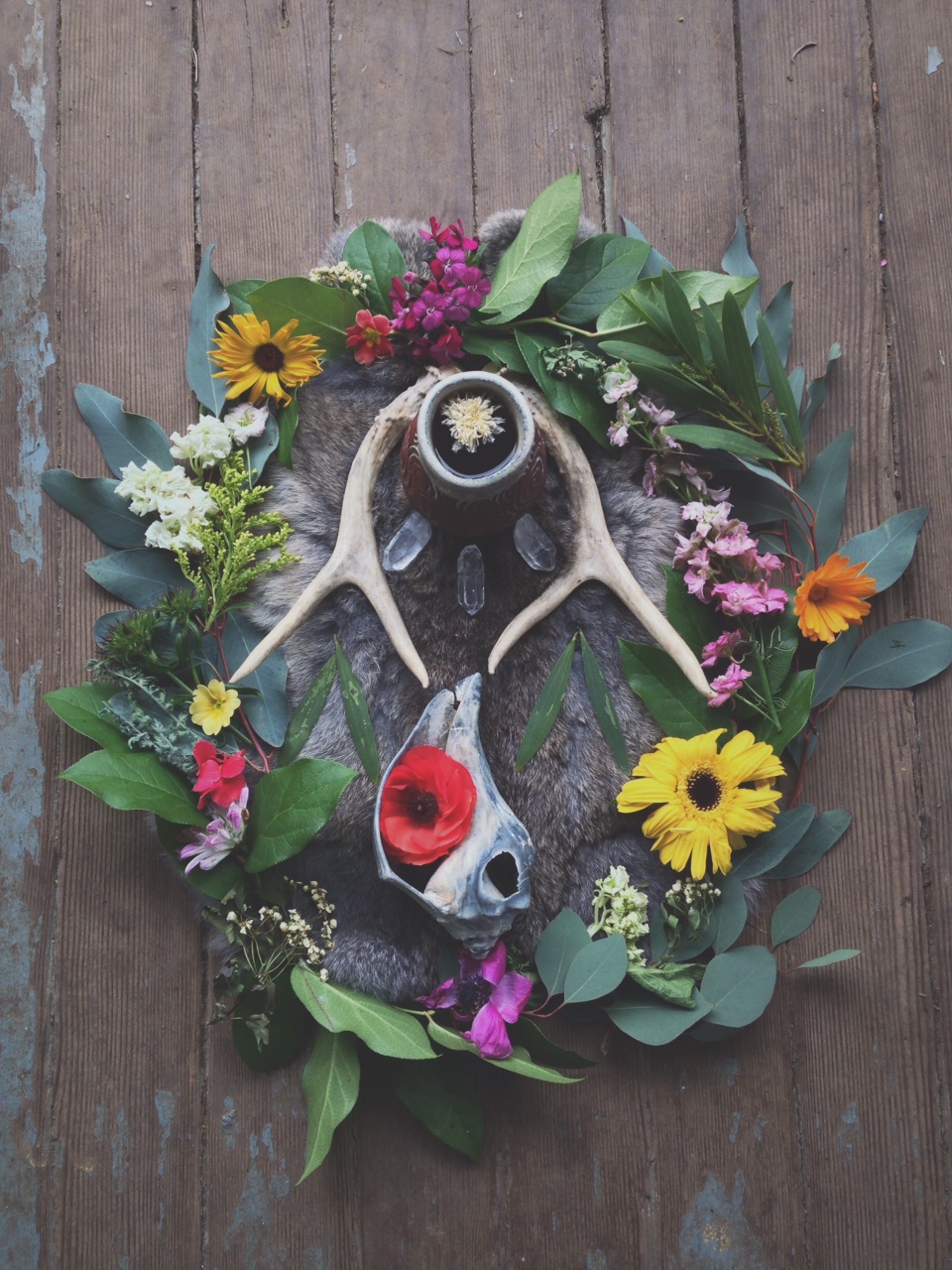
ALTAR DECOR: Fresh cut flowers, seeds, antlers, honey jars, fresh cut herbs
FOODS: Honey, beef, wine, sweets, sugary drinks, breads, dairy products

Tuesday, March 20, 2018

The Wheel of the Year - Ostara


Ostara, also known as the Spring equinox and the Pagan Easter, is time of balance and equilibrium - day and night are equal and the wheel is, for the moment, balanced. You can see signs of rebirth and life all around you in the natural world; flowers are blooming, the birds migrate home to lay their eggs, and if you're lucky you may even see a mother fox and her pups. During Imbolc we welcomed back the Sun and celebrated the triumph of light, now during Ostara that we can begin to truly see those changes. Today we will discuss the history of Ostara, its lore, symbols and how you can celebrate at home.


HISTORY AND LORE.

Ostara is the Pagan version of "Easter" (Ä’ostre) - or rather, Ostara is the day that Christians borrowed to be their Easter. Ostara is named from the Germanic goddess, Eostre/Ostara, who was traditionally honored in the month of April and celebrated with rituals and festivals of fertility, renewal and re-birth. We can still see many symbols from these festivals in the decorations we use today such as the hare, eggs, daffodils and many more! This is the second of the three spring festivals and will always fall between March 20-23 depending upon which day the equinox arrives.
In the story of the Goddess and God, Ostara is a time to celebrate the Goddess is in her young Maiden aspect, the Horned God is also young and vibrant - together the two of them revel in their youth until they mature and marry at Beltane (May 1).


The Christian version of Easter incorporates many Pagan symbols unbeknownst to many Christians - such as eggs, rabbits, clovers and lambs and as with many Christian holidays these symbols and traditions were incorporated into their own to make the conversion of early Pagans easier. The egg is a symbol of fertility and rebirth and it's symbolism is celebrated almost universally by ancient cultures. The Egyptians and Chinese all had their own customs of coloring eggs, today still you will find that painted eggs are a very popular and collectible Chinese art form. The legend of the Easter bunny and hiding of eggs are rooted in germanic folklore and traditions. So too the hare and lamb are the symbols of the the goddess Eostre, a Goddess of renewal and fertility. For Christians Easter is a day to remember the death of Jesus and but also to celebrate his resurrection, however early Christians historically did not celebrate Easter as we do today. It wasn't until the year 325 C.E. the church actually even established the date of Easter, which they proclaimed will be the first Sunday after the full moon following the Spring Equinox (Ostara).


  RITUAL AND OBSERVANCE.

It is common practice during Ostara to use this time to free yourself from things which hinder progress - hints the classic "spring cleaning" which we can apply to both our inner selves and our home. During this Sabbat we are celebrating the end of winter the triumphant rebirth of spring so many of the rituals that are practiced on this Sabbat revolve around these themes - ends and new beginnings.


You can celebrate at home in numerous different ways here are just a few:
  • Do some planting, either blessing seeds into the soil or transplanting seedlings.
  • Work in the garden or the yard clearing away the dead foliage from winter, look for signs of new life and fertilize your bushes and trees with compost.
  • Meditate on the rising sun and the lengthening days. 
  • Paint and consume hard boiled eggs. Eggs represent fertility and rebirth. 
  • Decorate your altar with the symbols of Ostara - eggs, feathers, flowers, seeds, rabbits. 
  • Write down a wish or goal you want to accomplish this season, roll the paper as though its a scroll and "plant" it into the earth. Cover the hole and take time each day to meditate on your scroll. 
  • Clean your home, focus on renewal and the banishing of harmful energies. Many witches use their ceremonial besome to sweep out the home as well. 
  • Smudge your home with sage bundles to remove any residual energies from the past year.  
  • Have breakfast for dinner! Both dairy, biscuits and eggs are had in plenty for an Ostara dinner.


CORRESPONDANCES.


SYMBOLS: Eggs, hares, deer, lambs, foxes, four-leaf clovers, flowers, seeds, baskets
COLORS: Green, yellow, white, and all pastel colors
ANIMALS: Hares, deer, chicks, lambs, butterflies, baby animals
GODDESSES: Eostre, Persephone, Diana, Astarte, Hera, Venus
GODS: Pan, Dionysus, Eros, The Green Man, Ares, Thoth
INCENSE: Jasmine, sage, rose, violet, and honeysuckle. 
CANDLES: White, silver, gold, yellow, pink
PLANTS: All new growth, all bulbous flowers, ash, birch, dogwood, olive, iris, honeysuckle, tulips, iris, peony
STONE: Clear quartz, rose quartz. jasper, moonstone, opal, turquoise 
ALTAR DECOR: Flowers, eggs (painted or plain), birds nests, seeds, budding flowers, stag antlers, light colored feathers
FOODS: Dairy products, eggs, biscuits, hot cross buns, roasted seeds, sprouts, spinach, lettuce, bacon, maple syrup 


sources: plentifulearth,com, whitegoddess.co.uk, wikipedia, thoughtco

Tuesday, March 6, 2018

The etsy shop is officially opened!

https://www.etsy.com/shop/thesunnyalcove

Months of preparation, product testing and investment have finally lead me to this moment and I am so stoked! It has been a long time coming but I can finally say the online store is officially opened. I am still building inventory and testing new soaps and recipes for new products daily but we are opened for business.

Currently I have 2 tried and true soaps available for sale in the shop: 


This honey soap was crafted with sensitive skin in mind! It's creamy and soothing lather will surely leave your skin feeling softer while it's warm vanilla undertones relax your spirit. Buy it now!

Scent profile:
Low notes: Warm vanilla
Mid notes: Sweet clover honey
Low notes: French lavender 


Ingredients: raw shea butter, coconut oil, palm oil, sunflower oil, glycerin, honey, purified water, sodium hydroxide, sorbitan oleate, sorbitol, propylene glycol, lavender essential oil, vanilla essential oil, lemongrass essential oil


Pink and purple melt together with cosmetic grade glitter to give these crystals soaps and your skin some extra sparkle! Each crystal was hand carved and carefully placed to achieve a crystal cluster appearance. Buy it now!

Scent Profile:
Low Notes: White Musk and Cotton
Mid Notes: Gardenia
Top Notes: Fresh Cut Daisies 

Ingredients: raw shea butter, coconut oil, palm oil, sunflower oil, olive oil, glycerin, purified water, sodium hydroxide, sorbitan oleate, sorbitol, propylene glycol, lavender essential oil, daisy essential oil, lemongrass essential oil, cotton flower fragrance oil, white musk fragrance oil, glitter (cosmetic grade) VEGAN FRIENDLY.


During these growing pains I'd really appreciate any words of wisdom or recommendations that any other shop owners would like to pass down to me - what helped you stay organized? How do you store your inventory? What's your best advise for finding potential customers? 
Some of the products I'd like to introduce into the store this spring are more soaps, salt scrubs, sugar scrubs, beard and hair oils, salves and lotion bars. I have several of these products in the testing stages as we speak but before I go overboard I'd love to hear from you! What would you like to see in the shop? Do you have a favorite hard to find scent? Would targeted products (acne prone, dry skin, etc) interest you? Send me a private message or comment on this post with your suggestions! 

Friday, February 2, 2018

The Wheel of the Year - Imbolc

Image source


Light has returned to the world and the first signs of spring are upon us. During Imbolc we celebrate the passing of winter and the start of the new agricultural year; the trees are budding, crocus flowers are popping up through the snow and the birds are beginning their journey home. Today we will discuss the history of the fire festival, how it's celebrated today and how you can join in at home!


HISTORY AND LORE.
Imbolc goes by many times; Brigid's Day, Candlemas and more. It's primies is always the same though, Imbolc is one of the four Celtic fire festivals, this fire festival is one of purification and renewal after the shut-in life of winter. It is the day that we celebrate the passing of Winter and make way for Spring. Today we honor our returning Sun through celebration.
Imbolc marks the recovery of the Goddess after giving birth to the young God. The lengthening periods of light awaken Her. By the time she awakens the God is a young, lusty boy, but His power is felt in the longer days. The warmth and light He brings to the world fertilizes the Earth (the Goddess), and causes seeds to germinate and sprout and so the earliest beginnings of Spring occur.

This is a Sabbat of purification after the shut-in life of Winter, through the renewing power of the Sun. It is also a festival of light and of fertility, once marked in Europe with huge blazes, torches and fire in every form. Fire here represents our own illumination and inspiration as much as light and warmth. Some female Witches follow the old Scandinavian custom of wearing crowns of lit candles, but many more carry tapers during their invocations.

Imbolc is also a day of celebrating the Celtic Goddess Brigid. Brigid is the Goddess of Poetry, Healing, Smithcraft, and Midwifery. If you can make it with your hands, Brigid rules it. She is a triple Goddess, so we honor her in all her aspects - maiden, mother and crone.
Around 432 AD when the Irish were convered to Christianity, the church began to find thatit was hard to convince Pagans to get rid of their old gods, so the church allowed them to worship the Celtic Goddess Brigid  as a saint–thus the creation of the Christian counterpart to Imbolc "St. Brigid's Day" was born.

You can see this history in the names of many churches which bear her name. For many Christians, February 2nd continues to be celebrated as Candlemas, the feast of purification of the Virgin. By Jewish law, it took forty days after a birth for a woman to be cleansed following the birth of a son. Forty days after Christmas is February 2nd. Candles were blessed, there was much feasting to be had, and the drab days of February suddenly seemed a little brighter. In Catholic churches, the focus of this celebration is St. Brighid.


RITUAL AND OBSERVANCE.
It is traditional upon Imbolc, at sunset or just after ritual, to light every lamp in the house - if only for a few moments. Or, light candles in each room in honour of the Sun’s rebirth. Alternately, light a kerosene lamp with a red chimney and place this in a prominent part of the home or in a window.
If snow lies on the ground outside, walk in it for a moment, recalling the warmth of summer, with your projective hand, trace an image of the Sun on the snow.


Other ways to celebrate include:

  • Decorate the alter with the colors and herbs of Imbolc
  • Take a walk at sunrise or sunset and contemplate your plans for spring
  • Make a Brigid doll or Brigids cross
  • Spring clean your home
  • Host a bonfire and invite your friends and family to celebrate winters end
  • Sweep the home (out the front door only) 


CORRESPONDANCES.
SYMBOLS: The sun, lightblubs, candles, torches, Brigid's cross
COLORS: Gold, red, orange, yellow, white, pink
ANIMALS: Bears, deer, lamb, sheep, goats, cow
GODDESSES: Brigid, Cerridwen. Persephone, Demeter, Venus, Gaia
GODS: Apollo, Dionysus, the Green Man, Eros, Pan
INCENSE: Jasmine, Frankincense, Lavender, Gardenia and other floral scents.
CANDLES: Gold, white, orange, red, yellow
PLANTS: Bay. lavender, blueberries, rosemary, thyme, basil
STONE: Topaz, garnet, ruby, emerald, opal
ALTAR DECOR: Milk jars, crafts, fresh flowers, candles, incense, acorns, snow in a jar, sun dials
FOODS: Spiced wine, curry, cheese, cakes, dairy products, white meats


sources: white goddess thoughtco plentifulearth

Wednesday, January 17, 2018

Grand Opening 02/02/2018!


The shops grand opening is fast approaching! Take a peak inside and grab some all natural art for your home and some organic bath & body products for you!

www.etsy.com/shop/TheSunnyAlcove

Wednesday, December 27, 2017

Gardening 101 - Part Three : Good Bugs vs Bad Bugs and Common Diseases


In the last installment of Gardening 101 we discussed soil profiles, compost and germination. So now your garden is growing, you have flowers all over your plants and even little fruits here and there when suddenly you spot a huge hole in a leaf on your eggplant, you lean in a little closer and OH MY GOD THAT IS A GIANT GRASSHOPPER. It is easy to see a bug in your garden and get spooked or totally grossed out but learning about what insects are visiting your garden is not only a great way to work on those phobias but it's also a great way to quickly spot problems and beneficial insects can even help you increase your harvest! Insects do a multitude of different things for our environment; they pollinate our plants, areteriate the soil, break down waste and serve as food for wildlife. Today we will discuss non-beneficial insects and beneficial garden insects as well as common diseases that may be plaguing your garden!


Bad bugs and creepy crawlies!


GRASSHOPPERS. Grasshoppers consume approximately one-half of their body weight per day so they can easily decimate an entire crop in one evening . Both adults and nymphs cause damage by chewing on the leaves and stems of plants, and if infestations are severe, may defoliate entire fields. 
Adults (1-2 inch long) are brown to reddish yellow or green in color with prominent jaws, fully developed wings and short antennae. They have enlarged hind legs and can jump great distances. Immature stages — nymphs — are similar in appearance to adults, but are smaller and have wing buds instead of wings. Control: Row covers are the best defense against these pests, I found they only attacked my garden at nighttime and that was also the best time to find them chewing away. Garlic spray and garlic plants are also good deterrents to put in place to ward off grasshoppers. You can also dust the plants with all purpose flour, this gums up the grasshoppers mouths preventing them from eating. 


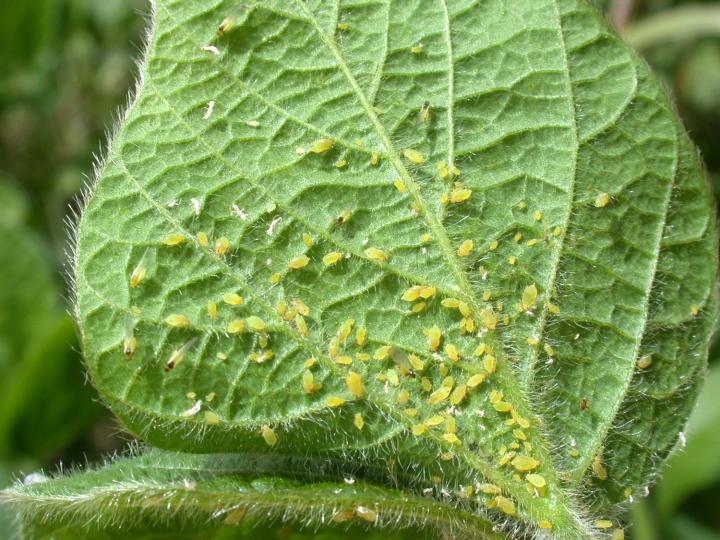
APHIDS. Aphids are small (1/8 inch long), soft bodied, pear-shaped insects that may be green, yellow, brown, red or black in color depending on species and food source. 
They tend to group together toward the base of the plant and on the underside of leafs as pictured left. Aphids secrete a a sticky fluid called honeydew as they eat your plants. This fluid drips onto plants, attracting ants and promoting mold growth on leaves. 
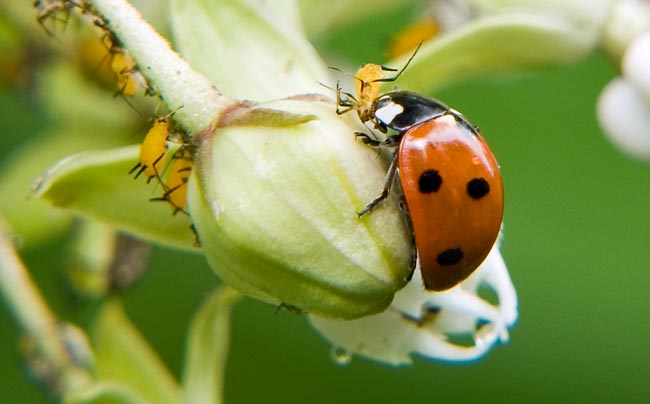
Control: Pruning off affected areas of the plant is an effective removal method if you've found them before the infestation has gotten bad. Another effective method is to turn your hose to its strongest setting and blast the plants with water, follow up with a soap spray and repeat as necessary every few days. Ladybugs also love to pest on this common pest.


FLEA BEETLES. These bugs cause damage to plants by chewing  small holes in the leaves, which make them look as if they have been shot with a buckshot. They feed most on hot sunny days and attack a wide variety of plants, most plants actually.
Adults are small brown or black beetles with large hind legs that allow them to jump when disturbed much like the common house flea. Flea beetles transmit viral and bacterial diseases so wear gloves when tending to the pest and shake off clothing before entering your home. 
Control: The best way to eliminate these pests is with food-grade diatomaceous earth, this is a nontoxic compound that scorches the body the beetle as it crawls through the fine powder - you can also use this on household fleas and most beetle type pests. Row covers and sticky traps are also very effective in protecting plants from this pest.


SQUASH VINE BORERS. If one day your squash is suddenly wilted and limp, you might have some of these pests in your garden. Larva overwinter in the soil and can work their way into your plants stems, alternatively the adult moth (pictured left) will lay eggs at the base of the plant.
The adult is a moth about ½ inch long that looks a bit like a wasp with a black body, marked with orange-red. The hind wings are transparent and the front wings are metallic green. If you slit open a stem lengthwise with a sharp knife, you will see the borer larva. It resembles a maggot with its fat, white, wrinkled body and brown head; it can grow to about an inch long. 


TOMATO HORNWORMS. Don't let their name fool you, these little jerks will destroy much more than your tomato plants - they also feed on peppers, eggplant and other soft leaf fruit bearing plants. Unfortunately most gardeners don't realize this pest has made its way into the garden until they find a large patch of damage, these guys eat fast. Tomato hornworms are the caterpillar stage of the Sphinx moth (the same type on the cover of Silence of the Lambs) so if you see these moths fluttering around your garden - take action immediately! The caterpillars are 3-4 inches long,  they are green with seven diagonal white strips and a black or red horn projecting from the rear.  In their moth stage they are large (4-5 inch wingspan), heavy-bodied moths. They are gray or brown in color with white zigzags on the rear wings and orange or brownish spots on the body - they fly quickly and are able to hover like a hummingbird over flowers and plants. 

Tip from PlanetNatural: To find the larvae hidden among plants, look for black droppings (frass) on the leaves and ground and spray the foliage with water. The caterpillars will thrash about and give away their hiding spots.

Control:  The best method for removal of this pest is to simply pick it off your plants and either crush it by hand or toss the caterpillars into a bucket of soapy water. (If you have chickens, they love these as a treat!) A very effective caterpillar killer is bacillus thuringiensis (marketed as BT), this organic compound usually comes in powder form and you simply sprinkle it over the plant - however this kills ALL caterpillars and not just pests so if for example you have some lovely monarch caterpillars on your milkweed make sure to keep BT very far away.
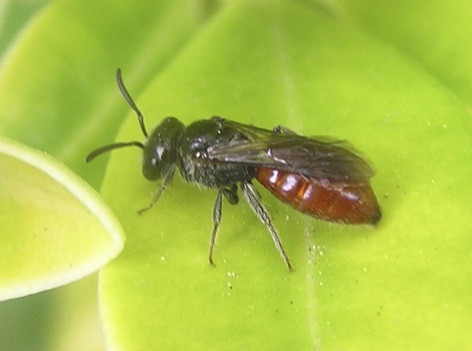
My favorite method for dealing with this pest is, we will go into more detail on these wasps in the benefinical section of this article, to use these for prevention you release them early in the the season. The wasps lay their eggs on the hornworm which then feed on the insides of the hornworm until the wasp is ready to pupate, when the wasp bursts from inside the hornworm they will seek out other hornworms to infect and kill. So if you see a hornworm covered in little white bumps (photo right), do NOT kill or remove it from your garden - let the wasps do what they do best! 


Good Bugs! 

BEES. These little guys are easily the most important insect on the planet earth,without bees to pollinate we wouldn't have any of the fruits or vegetables we love so dearly. There are over 20,000 different species of bees in the world and each region has a host of different species native to their area. Bees live in colonies called hives and can fly as far as 2 miles (3 km) from their hive to collect pollen though some beekeepers have seen their bees as far as 4 miles from the hive foraging. 
The honey bee is responsible for approximately 80% of the pollination of fruits, nut, grains, and vegetables in the United States today. Honey bees are not native to North America; they were brought here by European settlers in the colonial days to pollinate their crops and for the products created or gathered by the honey bees-honey, propolis, royal jelly, pollen, and beeswax. Some plants to help attract bees to your garden are; lavender, sage, thyme, mint, sunflowers, rosemary, chives, beebalm, basil, catnip and any other herb or brightly color flowers.


LADYBUGS. These brightly colored insects are every gardeners favorite, instead of feeding on your crop ladybugs feed on aphids, mites, the eggs of pest insects and other various small soft-bodies creepy crawlies. You can buy live ladybugs at almost any organic gardening center or you can order live ladybugs offline for usually less than $20.00 - generally they come in a plastic or cotton container filled with hay, woodchips or straw and to release them into your garden gently shake them loose during a time of day when pest activity is high (usually early morning or early evening as the sun sets), if you are lucky they will thrive in your garden and lay eggs and continue to act as pest-control. Ladybug eggs are bright yellow balls clustered together on the bottom of a leaf or near the plants stem, their larva and pupa are brownish black with yellow spots - leave them be! 

Note from PlanetNatural: Larvae will eat approximately 400 aphids prior to pupating. Adults will consume more than 5,000 aphids during their lifetime. 

What is a Asian ladybug? These are pest insects that are cousins of the common ladybug. It can be hard to tell the difference between the Asian ladybug and beneficial common ladybugs, they are very similar in color though Asian ladybugs have a wilder variety of color in all shades of yellow to orange to red, if you look closely, you will see the Asian lady beetle has a white marking behind its head in the openings of what looks like a black M. Some also have dark black spots like common ladybugs, but  on many their spots are very light or they have none at all. 
During the 1980-90's the USDA released a very large amount of these Asian ladybugs in Southern United States and they reproduced and spread like wildfire. Unlike common ladybugs these Asian beetles can and will occasionally bite humans. These pests also like to find their way into your home and hide in cracks, crevices, drawers and pretty much anywhere they can fit which is everywhere - it is important to avoid smashing them if possible, they release a gooey yellow substance that smells fowl and will attract more Asian ladybugs, some people also are allergic to this substance and can have mild to severe reactions from hives to asthma attacks. 


Here is a fun story from my personal experiences with Asian ladybugs; back in my teenage years, I went on vacation to North Carolina with my then (now ex) boyfriend and his family. His family owned a small cabin up in the smoky mountains and to get to the cabin you must drive up the mountain it's settled on at a 70 degree angle (or at least it felt that way!) all the way until you reached a large gate, it wasn't until you walked around the cabin to the front porch, which all but sat hanging off the side of the mountain, that you realized how high up and tucked away you really were. The cabin was beautiful, wild blackberries grew along the sides of the mountain and when it rained you could watch the dense puffs of steam rise off the mountains, at the time the inside was mostly finished but it was clear there were renovations being done, regardless it had all the charm and coziness you dream of when you think about a tiny mountain cabin. 

So where do the asian ladybugs come in? During the drive from Tennessee to North Carolina, at some point, his mother turned around in her seat and ominously questioned me "have you ever seen 1,000 dead ladybugs?" I, of course, told her no and she explained the mass release by the USDA, how they've become such pests in the region and how without fail every spring when they returned to vacation at the cabin virtually every surface was covered in Asian ladybugs corpses from the winter - the problem is so common that most residents of the area keep their bedding and chairs covered in plastic! I thought this was an exaggeration until I saw it with my own eyes, hundreds of dead ladybugs. They were built up around the windows, in corners and mostly floating in anti-freeze filled toilet and sink. I recall it taking several hours to clean up and each day we were greeted by new ladybugs - probably seeking revenge, if I had to guess. Moral of this story? These things get out of hand quick! Always make sure whatever you plant or release is native to your area and will not overwhelm the local ecosystem. 


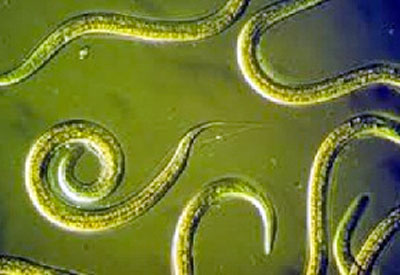
NEMATODE. The question you're probably asking yourself right now is; what the heck is that photo of and what the heck is a nematode? Firstly, those a nematodes under a microscope. Secondly, a nematode is a microscopic parasite closely related to roundworms and threadworms. These little guys are EVERYWHERE, from the lowest valley to the tops of the highest mountains. While some types of nematodes do cause sickness and diseases in humans and animals, the type we are discussing today do not. 
Beneficial nematodes work by actively seeking out and attacking pests that harm plant life, nematodes destroy over 150 different types of insects that live in soil or mature in the ground. These include weevils, beetles including roaches, fleas, borers and gnats.  Beneficial nematodes do not attack earthworms or most other beneficial insects. They’re excellent for use in lawns, in gardens and around trees and shrubs. They need generally moist condition to facilitate their movement. 


PRAYING MANTIS. 
Large, green or tan praying mantis are most often sold as egg cases which can yield up to 200 and more small adults (some pet stores carry single mature adults for housing in terrariums and other enclosed environments). Two to three weeks of warm temperatures allow the eggs to hatch. The newly hatched insects squeeze through the egg sac, leaving it intact and disperse quickly without leaving behind a clue that hatching has occurred. It takes as much as five months for mantises to reach full size.  These critters feed on pests such aphids, leafhoppers, mosquitoes, caterpillars and other soft-bodied insects when young. Later they will eat larger insects such as beetles, roaches, grasshoppers, crickets, moths and even locusts! 


TIPS ON RELEASE FROM PLANETNATURAL:

  • Use 3 egg cases for small areas — under 5,000 sq ft — and increase the amount accordingly for larger areas. 
  • Tie each egg case to twigs or branches about three feet above the ground. Birds and rodents will feed on egg cases. 
  • Placing them in a container with holes large enough for the nymphs to escape — 1/4 to 1/2 inch diameter — will provide protection.


PARASITOID WASPS. Just like there are thousands of different types of bees, there are thousands of different types of wasps. When a gardner refers to parasitoid wasps they could be referring to several different kinds depending on what their pest problem is. Generally speaking these tiny wasps, which are not harmful to humans at all and do not sting, reproduce and act in the same manner. They infect the larva of immature stages of various pests with their own eggs and those eggs feed off the pest until they themselves mature then the adult wasps will seek out more pests to continue the cycle.


Common Plant Diseases   
There are many times when the problems you'll encounter in your garden are not the cause of pests but of different fungi sapping the life from your plants. Here are few of the most common plant diseases and some simple remedies. 


BLOSSOM END ROT: This is a common disease most gardeners, especially busy gardeners, will encounter at least once. This generally occurs on tomatoes but can also affect peppers and other fruits in the nightshade family. 
Blossom end rot is caused by a few different things; a lack of calcium, too much salt, lack of/over watering or rapid growth. This disease manifests itself on both ripe and unripe fruit, soggy spots will appear at the bottom of the fruit (where the blossom was) and will eventually turn brown and ruin the fruit by causing mold or attract pests. This disease will not spread from plant to plant so focus on treating the affecting plants only. To treat and prevent this disease you can; till eggshells or bone meal into the soil before planting (you can purchase calcium sprays from your local garden center too), use chopped leafs, straw or undyed wood chips as mulch to prevent moisture from leaving the soil, and avoid over fertilizing with commercial brand fertilizers that are high in nitrogen.   


RUST: Rust affects many different vegetation, flowers and trees. There are over 4,000 different varieties of rust, rust first appears on the underside of leafs and toward the lower parts of the plant. It is a raised bright golden or orange spots that appear very much like rust, as the fungi grows spores small fuzzy spots in red or black may appear and then will spread via wind to other nearby plants. 
Rust likes warmth, humidity and darkness so making sure your plants get plenty of light and are pruned so air can flow freely is a big help to preventing this fungi. Water in the morning to prevent excess moisture retention and water only at the base of the plant, do not soak the leafs. You should prune off and dispose of effected leafs and stems - DO NOT COMPOST THEM. You can also purchase organic sprays and powders if the disease has gone unchecked for too long. 


POWDERY MILDEW: This is probably the most common fungi in North America, it affects almost all types of plants and is easily identified by powdery white areas on the top of young leafs. The fungi begins as tiny raised bumps near the edges of the leaf causing it to warp and curl before the white powder mildew appears. Prune and destroy effected leafs and plants and make sure plants have good ventilation and air flow to prevent further development. Keep excess yard and plant debris away from young susceptible plants and water in the morning before the heat of the day.


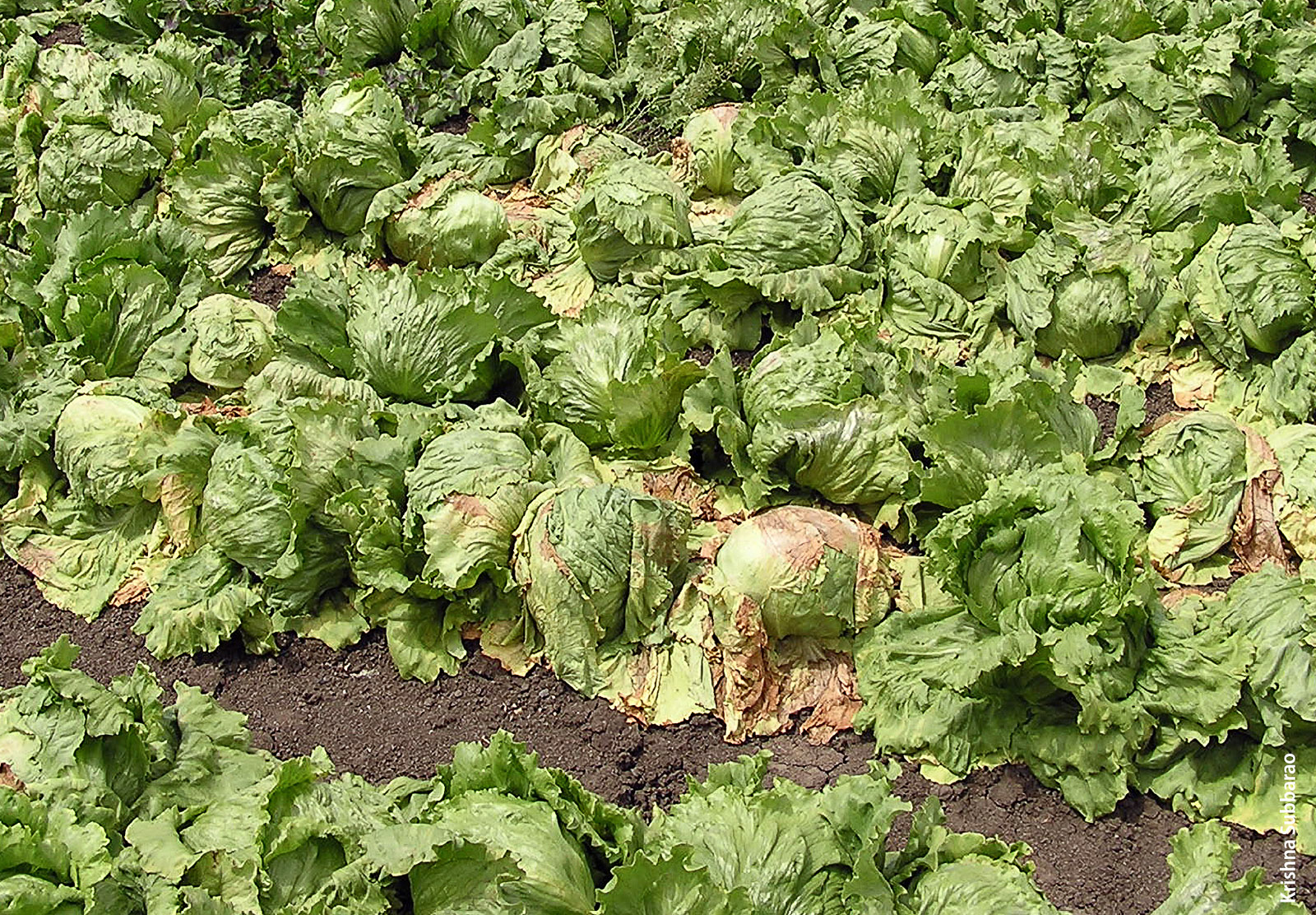
FUSARIUM WILT: I wanted to cover this disease because it is every gardeners worst fear. This disease generally will go unnoticed until it is too late for you to do anything and it can survive for years in the soil. Fusarium wilt is a soil borne pathogen that affects potatoes, tomatoes, peppers and other members of the nightshade family. It enters your plants through the roots and causes the plants leafs to yellow, wither and die. It then slowly works its way up your plant from larger mature leafs to younger leafs. This disease is spread by wind, water, pests and infected gardening tools - unlike some of the other diseases we covered today this one thrives in dry weather with hot temperatures. 
When you notice this disease you should immediately prune effected areas away and sterilized your pruning sheers before using them again - throw the clipping away or destroy them. DO NOT COMPOST FOR ANY REASON. You can purchase sprays and compounds to combat the disease but if you are unable to destroy the disease you should replace the soil in your garden beds or solarize your garden soil. 


VERTICILLIUM WILT: This disease is very similar to fusarium wilt in appearance but unlike fusarium wilt this disease is much more persistent and can survive cold weather and overwinter much more easily. Study has shown that crop rotation is very helpful in the prevention of this disease, since the pathogen develops in the soil it will grow in strength in the same unaltered environment so by rotating crops with more resistant varieties the disease cannot thrive.